When I first landed in China as a freshman, I thought I knew what Chinese food was. Sweet and sour pork from the takeout place back home. Fried rice with exactly three peas in it. The stuff they call “General Tso’s chicken.”
I was wrong. Completely wrong.
The first meal I had on campus was at the university canteen. It was chaos. Twenty windows, each serving something different — noodles, rice dishes, dumplings, soups, grilled stuff. I stood there like an idiot holding a tray, unable to read half the signs, too shy to ask what anything was. A random Chinese student saw me panicking and just pointed at a window, said “that one’s good,” and disappeared. I followed their advice and ended up with a bowl of noodles that changed my life. That was the moment I realized eating in China isn’t just about food — it’s about learning to let go and try stuff.
This guide is everything I wish someone had told me before I arrived.
The University Canteen: Your Daily Battleground
Every Chinese university has at least one canteen. Big ones have three or four. The system is simple but confusing if you’ve never seen it before.
You walk in, grab a tray, and walk past a row of food stations. Each station has a different type of food — one does stir-fried vegetables and meat, another does soup noodles, another does steamed buns and dumplings, and a fourth does rice rolls and congee for breakfast. At each station, you point at what you want, they scoop it onto your plate or into a bowl, and you pay on the spot with your student card or phone.
Prices are stupidly cheap. A full meal with rice, two vegetable dishes, and a meat dish costs between 8 and 15 yuan — that’s about one to two dollars. Breakfast is even cheaper. A steamed bun stuffed with pork and a cup of soy milk will set you back three yuan.
The key to surviving the canteen is to watch what the Chinese students eat, not what the menu board says. If a particular station has a long line, get in it. Chinese students know which stations serve the freshest food. Also, the windows rotate their menu throughout the week, so don’t give up on a canteen just because one day’s offering looked sad.
Most canteens also have a special section called gaishifan (盖浇饭) — rice topped with a generous portion of stir-fried meat and vegetables. It’s the go-to comfort meal for broke students everywhere. Safe, filling, and impossible to mess up.
Street Food: Where the Real Magic Happens
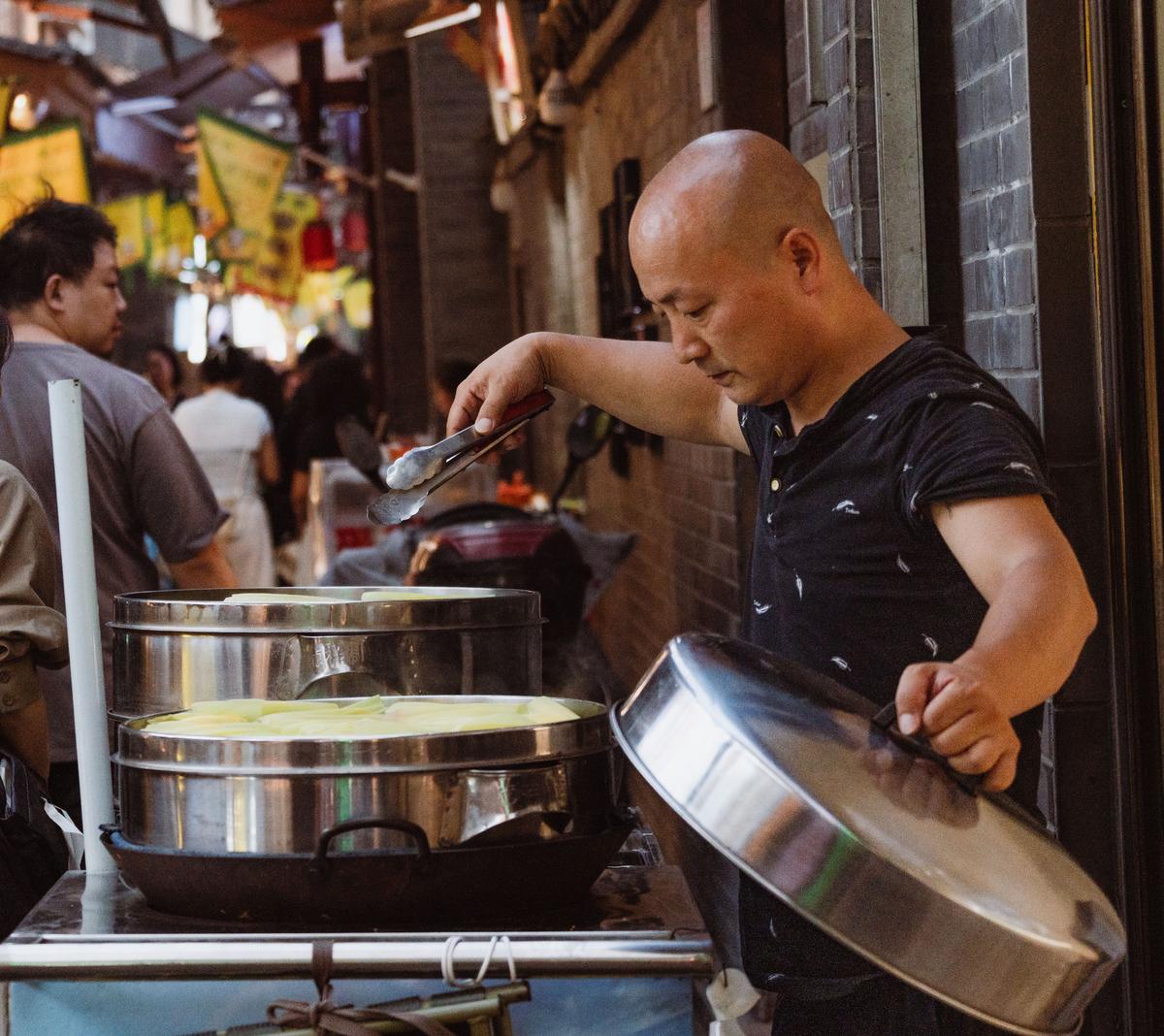
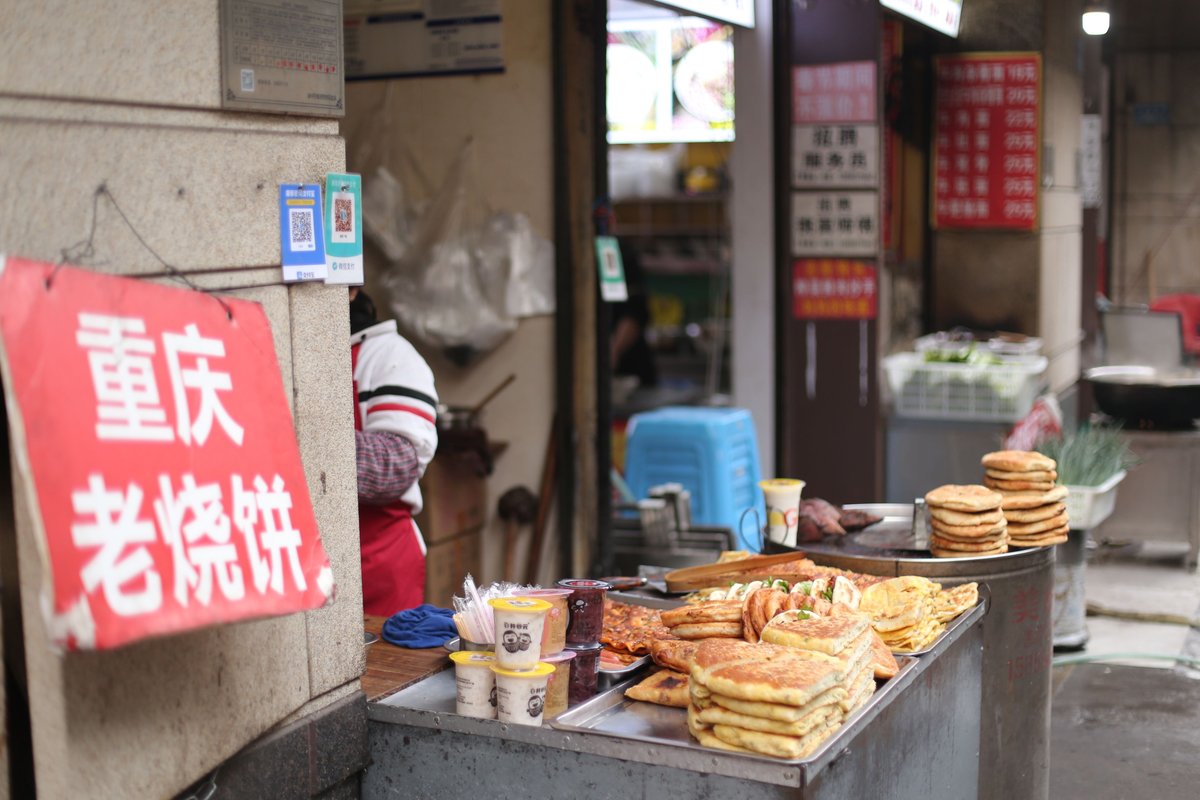
Once you’ve got the canteen figured out, it’s time to explore what’s happening outside the campus gates. Every Chinese university is surrounded by a “student street” — a narrow lane packed with food stalls, bubble tea shops, and tiny restaurants. This is where the flavors get real.
Here are the street food staples you absolutely need to try:
Jianbing (煎饼) — Think of it as a Chinese crepe. A thin layer of batter gets spread on a hot griddle, an egg is cracked on top, scallions and cilantro get sprinkled, then it’s folded with a crispy cracker inside and brushed with hoisin and chili sauce. Costs about six yuan. It’s the perfect breakfast if you’re running late to class.
Chuan’r (串儿) — Skewered meat grilled over charcoal. Lamb, beef, chicken wings, squid, whatever you want. You pick your skewers from a fridge, hand them to the guy running the grill, and wait. They come out smoky, slightly charred, and dusted with cumin and chili powder. This is what you eat at 10 PM when you’re hungry and your roommate is also hungry.
Jiaozi (饺子) — Dumplings filled with pork and cabbage, lamb and onion, or chive and egg. You can get them boiled or pan-fried. Every Chinese family has an opinion on the best filling. Try both.
Tanghulu (糖葫芦) — Candied hawthorn berries on a stick. It’s sweet, sour, and crunchy. Great for a random afternoon snack while walking around town.
The unspoken rule of street food: go where the crowd is. If a stall has a line of local students, it’s good. If it’s empty, skip it. And don’t worry too much about hygiene — the turnover at busy stalls is so fast the ingredients never sit around long enough to go bad.
“Chinese Fast Food” Is Not What You Think
Forget McDonald’s (though there are plenty of those too). China has its own fast food culture, and it runs through two apps: Meituan and Ele.me.
You order food delivery from your phone — everything from hotpot ingredients to a single bowl of noodles to an entire roast duck — and it shows up at your dorm gate within thirty minutes. The delivery fee is usually free or costs two to three yuan. No tip expected.
The trick is learning to read the Chinese names of dishes on the app. Take screenshots of menu boards at the canteen, load them into a translator app, and save the Chinese names of dishes you liked. After a week, you’ll recognize the characters for “chicken,” “beef,” “rice,” “noodles,” and “spicy.” That’s enough to order anything.
Popular delivery dishes for beginners: yuxiangrousi (fish-fragrant shredded pork — no actual fish), gongbao jiding (Kung Pao chicken), dàpánjī (big plate chicken from Xinjiang), and mápo dòufu (mapo tofu — a lifesaver for vegetarians).
“How Do I Deal with the Spice?”
I get asked this constantly. Chinese food can be spicy, but not all of it is. The misconception comes from Sichuan and Hunan cuisines being the most exported. The reality is that every region has its own style.
If you’re in Sichuan or Chongqing, the default is spicy. You will eat chili even when you didn’t ask for it. My advice? Start with huǒguō (hotpot) and choose a yuanyang (鸳鸯) pot — half spicy, half mild broth. The mild side is a savory bone broth that’s packed with umami and won’t burn your mouth. Over time, you’ll find yourself sneaking bites from the spicy side.
If you’re in Shanghai, Guangzhou, or Beijing, the food is milder. Shanghai food leans sweet and soy-saucy. Cantonese food focuses on the natural flavor of fresh ingredients — steamed fish, roast goose, clear broths. Beijing food is hearty and wheat-based — noodles, dumplings, lamb hotpot.
The phrase you need to know: bú yào là (不要辣) — “no spice.” Say it clearly when ordering. Some stalls will still think you can handle it and add a little anyway. That’s just how it goes.
Eating Out with Chinese Friends: The Etiquette
Your Chinese classmates will inevitably invite you to dinner. Here’s how not to embarrass yourself.
When food arrives at a round table, dishes go in the center and everyone shares. You don’t serve yourself first. Let the elder or the host start eating before you dig in. Use your own chopsticks or the serving spoon to pick food from shared plates — do not use your personal chopsticks to pick food directly from the shared dish until people tell you it’s okay (many young people don’t care anymore, but it’s safer to ask).
When someone pours you tea, tap the table with two fingers — that’s the “thank you” gesture. If they pour you baijiu (Chinese liquor), you don’t have to drink it all. Sip it. It’s strong. Nobody will force you to finish it, but refusing outright can seem unfriendly. A polite sip and a smile works.
At the end of the meal, people will fight over who pays the bill. This is normal. If your Chinese friend insists on paying, let them. Next time, you pay. It’s a relationship thing, not a transaction.
Supermarket Survival: What to Stock in Your Dorm
Your dorm kitchen (if you have one) is tiny. Most international students rely on a small electric pot for cooking. Here’s what you should buy from the supermarket to supplement your canteen diet:
Instant noodles — But not the cheap ones. Look for the “good” brands like Kangshifu or Baixiang. They actually have real seasoning packets and dried vegetables. Buy them in bulk from Taobao.
Frozen dumplings — Every Chinese supermarket sells bags of frozen jiaozi. Boil them for eight minutes, dip in soy sauce and vinegar, and you’ve got dinner.
Seasoning basics — Soy sauce (生抽 for light, 老抽 for dark), Chinkiang vinegar (镇江香醋), chili oil (辣椒油), white pepper powder, and sesame oil. With these five, you can make almost anything taste good.
Fruits — Go to the wet market near your campus, not the supermarket. Fruit is cheaper and fresher. Buy whatever is in season. In summer it’s watermelon and lychee. In autumn it’s persimmons and pomegranates. A week’s worth of fruit costs about 30 yuan.
Yogurt drink — The kind in the fridge section that comes in a big bottle. It’s not sweet like Western yogurt drinks — it’s tangy and slightly salty. Takes some getting used to but it fixes digestion like magic.
Final Thoughts: Just Eat
The best advice I can give you about food in China is to stop overthinking it. I spent my first two weeks eating only fried rice because I was scared to try new things. I regret every single one of those meals.
Chinese food culture is not a monolith. It’s thirty-plus regional cuisines, each with its own logic and flavor. The canteen lady who doesn’t speak English will still try to give you extra meat if you smile at her. The street food uncle will remember your order after the third visit and start asking where your girlfriend is. The classmates who drag you to hotpot at 11 PM on a Tuesday will become your closest friends.
Food in China is not just fuel. It’s how people connect, how they celebrate, how they comfort each other. And as an international student, the fastest way into that world is through your mouth.
So grab your tray. Point at something. Eat it.