
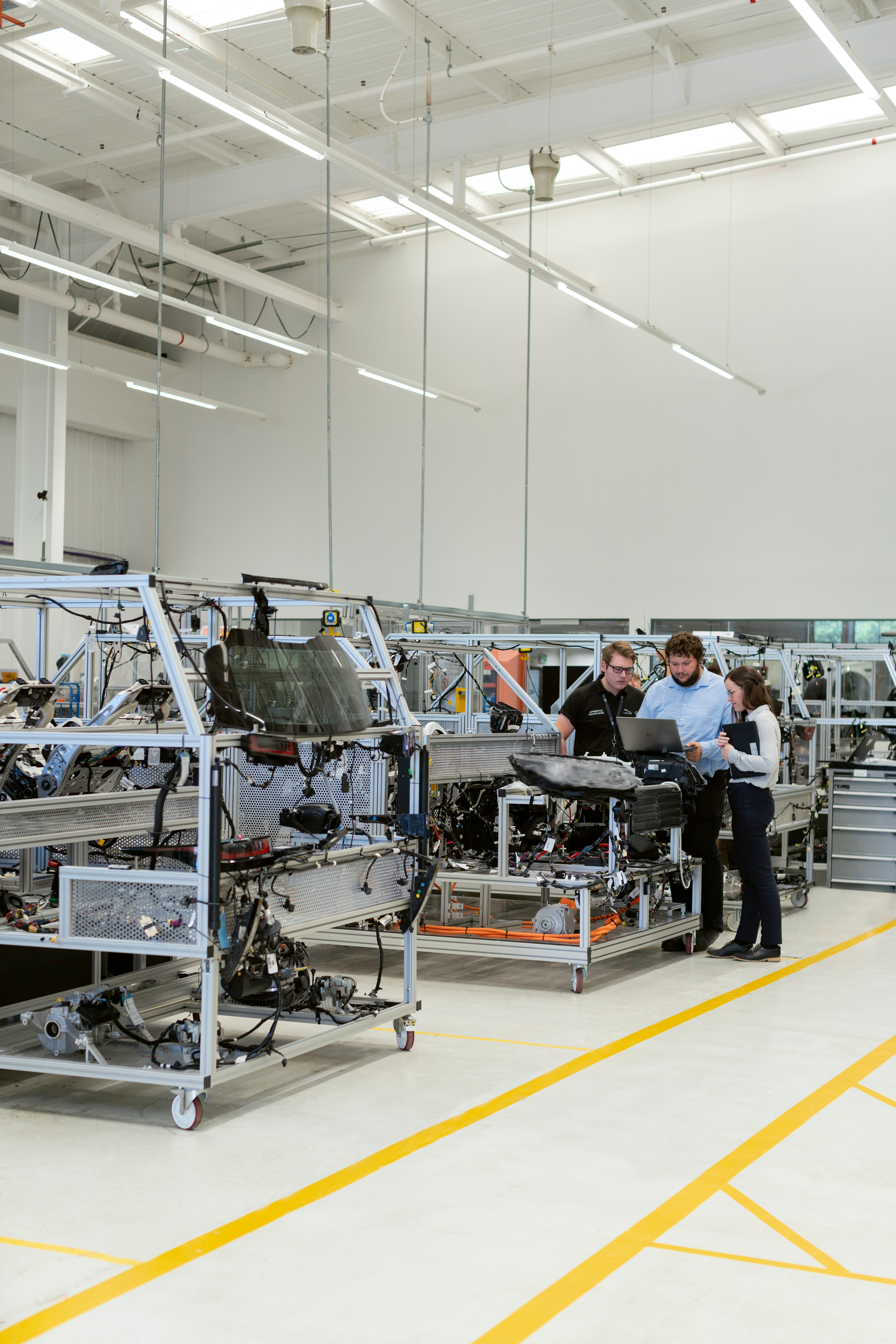
When international students think about studying engineering in China, they usually focus on rankings, tuition fees, and scholarship opportunities. But there’s another factor that can make or break your engineering education: the quality of the labs and facilities you’ll be working in. Chinese universities have invested heavily in laboratory infrastructure over the past decade, and the results are impressive. From state-of-the-art 3D printing workshops to AI research centers with the latest computing hardware, engineering students in China have access to equipment that rivals — and in some cases surpasses — what’s available in Western universities.
The Scale of Investment in Chinese University Labs
China’s “Double First-Class” initiative, launched in 2017, poured billions of yuan into upgrading university facilities across the country. Engineering schools were among the biggest beneficiaries. Tsinghua University alone operates over 50 national-level research labs and platforms. Zhejiang University’s College of Engineering has 13 national key laboratories. And these aren’t just small teaching labs — they’re full-scale research facilities equipped with industrial-grade machinery.
According to the Ministry of Education, Chinese universities now operate over 700 national key laboratories, with approximately 40% dedicated to engineering and technology fields. For international students, this means hands-on access to equipment that would be restricted to graduate researchers in many other countries.
3D Printing and Additive Manufacturing Labs
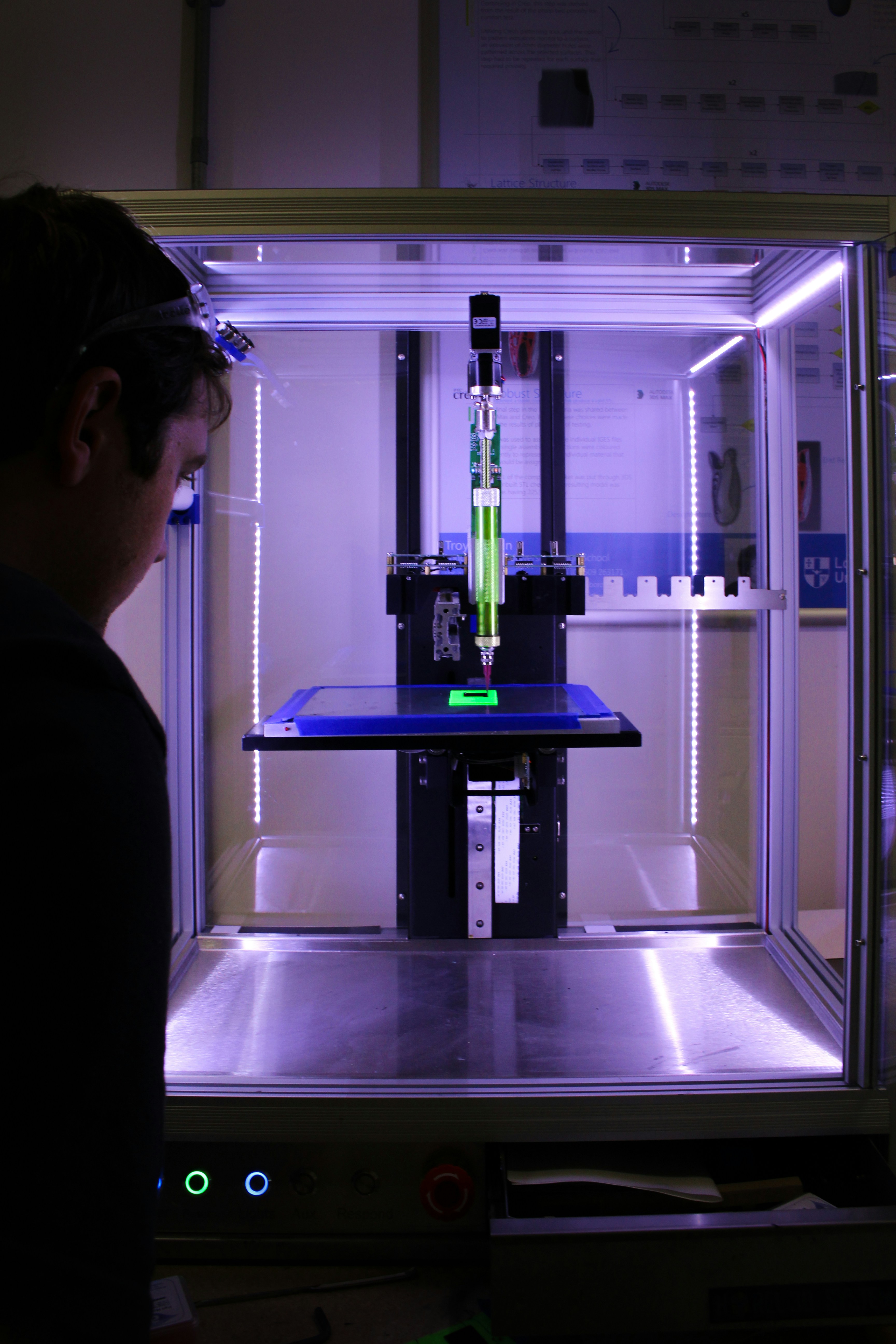
3D printing is one area where Chinese universities truly shine. Almost every top engineering school now has a dedicated additive manufacturing lab. Here’s what you can expect:
| University | 3D Printing Equipment | Key Facilities |
|---|---|---|
| Tsinghua University | Metal SLS, SLA, FDM printers | Biomanufacturing Center, National Key Lab for Precision Manufacturing |
| Huazhong Univ. of Sci & Tech | Industrial-grade metal printers | National Engineering Research Center for Laser Processing |
| Xi’an Jiaotong University | Multi-material 3D printers | State Key Lab for Manufacturing Systems Engineering |
| Zhejiang University | Bio-printers, ceramic printers | Key Lab of 3D Printing Process and Equipment |
| Shanghai Jiao Tong Univ. | Industrial robotic 3D printing | National Engineering Lab for Digital Manufacturing |
At Tsinghua’s Biomanufacturing Center, undergraduate engineering students can work with advanced bio-printers that print living tissue scaffolds. At HUST, the National Engineering Research Center for Laser Processing gives students hands-on experience with industrial-grade laser cutters and metal 3D printers. These are not just demo machines — they’re production-level equipment used in real manufacturing.
AI and Robotics Research Centers
China is betting big on artificial intelligence and robotics, and university labs reflect this priority. Many engineering schools now have dedicated robotics research centers where students can work with industrial robots, autonomous vehicles, and AI development platforms.
Tsinghua’s Institute for AI — One of China’s largest AI research facilities, equipped with NVIDIA DGX clusters, hundreds of GPU servers, and specialized hardware for computer vision and natural language processing research. International engineering students can apply for research assistant positions and get hands-on experience with cutting-edge AI infrastructure.
Shanghai Jiao Tong’s Robotics Institute — Features a full-scale autonomous vehicle testing track, a drone swarm laboratory, and a humanoid robotics lab with dozens of programmable robots. The institute collaborates with companies like DJI and SenseTime, giving students exposure to real-world robotics applications.
Harbin Institute of Technology’s Robot Lab — HIT has one of China’s most famous robotics programs. Their lab houses industrial robotic arms, collaborative robots (cobots), and advanced control systems. HIT students regularly win international robotics competitions.
Smart Manufacturing and Industry 4.0 Workshops
Several Chinese universities have built full-scale smart factory demonstration lines on campus. These are essentially miniature production lines that showcase Industry 4.0 concepts — IoT sensors, cloud-based monitoring, digital twins, and automated quality control.
Tongji University’s Sino-German College of Intelligent Manufacturing — A joint venture with German engineering firms, this facility features a fully automated production line with Siemens PLC systems, KUKA robots, and an integrated MES (Manufacturing Execution System). Students can design, simulate, and test production processes in a real factory environment.
South China University of Technology’s Smart Manufacturing Lab — Located in Guangzhou, this lab focuses on flexible manufacturing systems. Equipment includes CNC machining centers, automated guided vehicles (AGVs), and a cloud-based monitoring platform. International students in the mechanical engineering program run practical sessions here starting from their second year.
Civil Engineering and Materials Testing Labs
Civil engineering students benefit from some of the most impressive testing facilities in the world. Chinese universities routinely test large-scale structures, materials, and geotechnical systems.
- Tongji University’s Structural Engineering Lab — Houses one of Asia’s largest shaking tables for earthquake simulation. The table can support structures weighing up to 30 tons and simulate real earthquake waveforms. Civil engineering students use this facility to test building designs under seismic loads.
- Tsinghua’s Materials Testing Center — Features electron microscopes (SEM, TEM), X-ray diffraction analyzers, and universal testing machines with capacities up to 2,000 kN. These are open to undergraduate research projects.
- Hohai University’s Hydraulics Lab — With China’s massive water infrastructure projects, Hohai’s lab includes flow visualization channels, wave flumes, and sediment transport simulators that are used for both teaching and research.
Electronics and Embedded Systems Labs
For electrical and electronics engineering students, Chinese universities offer well-equipped electronics labs with modern test and measurement equipment:
- Digital oscilloscopes (Keysight, Tektronix — latest models)
- Spectrum analyzers and network analyzers
- FPGA development boards and embedded system kits
- PCB prototyping facilities including CNC engraving and etching
- RF and microwave testing chambers
University of Electronic Science and Technology of China (UESTC) in Chengdu has one of China’s most comprehensive electronics labs. Their microelectronics lab allows students to design, fabricate, and test integrated circuits — a rare opportunity at the undergraduate level.
Lab Access Policies for International Students
One common question international students ask is whether they’ll have the same lab access as local students. The answer is generally yes, with a few practical considerations:
| Lab Type | Access for International Students | Notes |
|---|---|---|
| Teaching Labs | Full access during enrolled courses | Scheduled as part of curriculum |
| Research Labs | Apply through supervisor | Need professor approval |
| Open Innovation Spaces | Free access with student ID | 24/7 access at some universities |
| Specialized Equipment | Training required first | Safety certification needed |
Most universities require a short safety training course before allowing access to high-risk labs. This is usually conducted in English or with translation support for international students. Some facilities (like the bio-printing or nuclear labs) have additional security clearances, but these apply equally to all students regardless of nationality.
How Lab Facilities Compare Internationally
By global standards, Chinese university engineering labs are very strong. A 2025 survey by Times Higher Education ranked six Chinese universities in the global top 50 for engineering research facilities. Tsinghua’s engineering facilities were ranked 12th globally — ahead of Imperial College London and ETH Zurich.
Where Chinese labs often excel:
- Equipment age — Much of the equipment in top Chinese engineering schools is less than 5 years old, thanks to continuous government investment.
- Scale — Chinese university labs are often physically larger, with more workstations and machines available per student.
- Industry integration — Strong ties with manufacturing and tech companies mean lab equipment is often the same as what students will encounter in industry.
Where improvements are still needed:
- English labeling — Some equipment interfaces are still in Chinese only, though this is changing rapidly.
- After-hours access — While improving, many research labs still have restricted hours compared to Western universities.
Tips for Making the Most of Lab Facilities
If you’re planning to study engineering in China, here’s how to maximize your lab experience:
- Join a research group early. Most professors welcome enthusiastic undergraduate researchers. A research assistant position gives you after-hours lab access and mentorship.
- Learn the equipment names in Chinese. Knowing the Chinese names for lab equipment helps when reading manuals and communicating with lab technicians.
- Ask about open lab hours. Many engineering schools now have “innovation spaces” open 24/7 for student projects. Find yours early.
- Participate in competitions. Engineering competitions (robotics, programming, design) give you intensive lab access and look great on your resume.
- Take the lab safety course seriously. It’s your gateway to using advanced equipment independently.
Bottom Line
Chinese universities offer engineering lab facilities that are among the best in the world, especially in 3D printing, AI/robotics, smart manufacturing, and civil engineering. For international students, the key is being proactive — the equipment is there, but you need to seek out opportunities to use it. Join labs, talk to professors, and don’t be shy about asking for hands-on experience. The facilities are world-class, and they’re waiting for you to use them.