
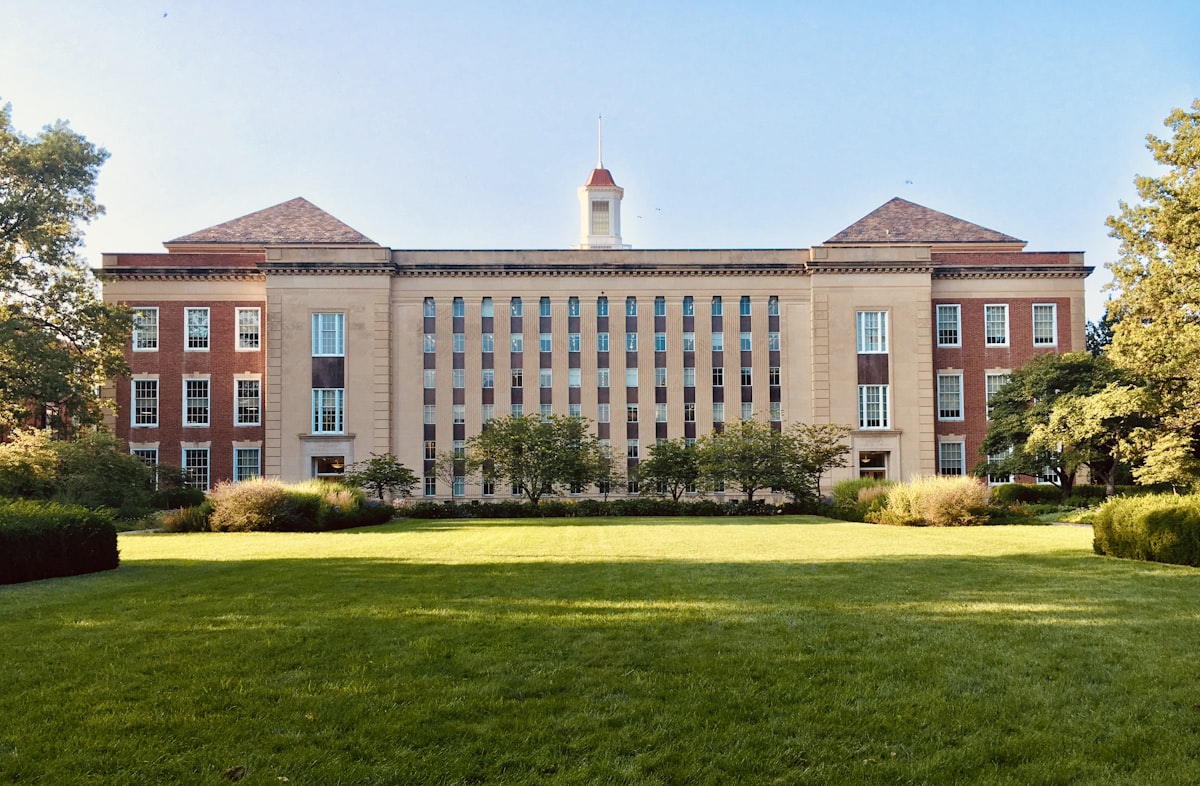
Saudi Arabia and China are writing a new chapter in educational cooperation. From just 40 Saudi students in China a decade ago to over 1,200 students in 2026, the growth has been remarkable. Saudi Arabia’s Vision 2030 and China’s Belt and Road Initiative have created a powerful synergy, making Chinese universities an increasingly attractive destination for Saudi students seeking world-class education in engineering, medicine, and business.
According to the latest data from China’s Ministry of Education, 380,000 international students from 191 countries were studying in China as of the 2024-25 academic year, with Asian students comprising 61.1 percent of the total. Saudi Arabia has emerged as one of the fastest-growing source countries, with Beijing International Studies University alone hosting 177 Saudi students — making them the largest international student group on that campus. Chinese has also been introduced as a mandatory foreign language in over 70 Saudi schools, and over 85,000 Saudi students are expected to benefit from Chinese language programs by the end of 2026.
This comprehensive guide covers everything Saudi students need to know about studying in China in 2026 — from popular majors and scholarship options to visa procedures, cultural adaptation, and real success stories from Saudi graduates.
Why Saudi Students Choose China
The number of Saudi students in China has grown from approximately 40 in the early 2010s to over 1,200 by 2026. Here are the key factors driving this trend:
| Factor | Details |
|---|---|
| Saudi Vision 2030 | Saudi Arabia’s national transformation plan prioritizes education in engineering, AI, renewable energy, and medicine — fields where China excels globally |
| Generous Scholarships | Saudi students have access to both Saudi Government Scholarships (King Abdullah Scholarship Program) and Chinese Government Scholarships (CSC), often covering 100% of costs |
| World-Class Universities | China has 33 universities in the global top 500, with strengths in engineering, technology, and medical sciences that rival traditional Western institutions |
| Cost-Effectiveness | Chinese university tuition fees are 40-50% lower than equivalent programs in the UK or US, making China the most cost-effective option even for self-funded students |
| Visa Convenience | China has implemented visa-free travel for Saudi citizens (effective June 2025), and student visa (X1/X2) processing continues to be streamlined |
| Growing Saudi Community | A thriving Saudi student community exists at major Chinese universities, with active cultural associations and strong support networks |
In 2023 alone, Saudi Arabia sent 783 students to study in China, according to China’s Ministry of Foreign Affairs. By 2026, this number has grown to over 1,200, with Saudi students pursuing degrees at top universities including Peking University, Tsinghua University, Shanghai Jiao Tong University, Wuhan University, and Beijing Language and Culture University.

Popular Majors for Saudi Students
Saudi students in China pursue a wide range of academic disciplines, with a strong focus on fields aligned with Vision 2030. Based on enrollment data and application trends, here are the most popular fields of study:
| Field of Study | Annual Tuition (CNY) | Duration | Why Popular for Saudi Students |
|---|---|---|---|
| Petroleum & Chemical Engineering | 18,000 – 32,000 | 4 years | Direct alignment with Saudi Arabia’s core industry; strong programs at China University of Petroleum |
| MBBS (Clinical Medicine) | 20,000 – 45,000 | 5-6 years | Degree recognized by Saudi Commission for Health Specialties (SCFHS); English-medium instruction |
| Computer Science & AI | 16,000 – 30,000 | 4 years | Aligned with Saudi NEOM and digital transformation; China is a global AI leader |
| Business Administration & Finance | 14,000 – 28,000 | 4 years | Growing Saudi-China trade corridor creates demand for bilingual business professionals |
| Renewable Energy Engineering | 18,000 – 30,000 | 4 years | Key pillar of Saudi Vision 2030; China is the world’s largest renewable energy market |
| Chinese Language | 10,000 – 20,000 | 1-2 years | Mandatory in Saudi schools; growing demand for Arabic-Chinese bilingual professionals |
Engineering ranks first among all degree-seeking international students in China, with 27.8 percent choosing it as their major. For Saudi students, petroleum engineering and chemical engineering are particularly attractive given the Kingdom’s position as the world’s second-largest oil producer. Computer Science and AI have also seen a surge in Saudi applications, driven by NEOM and Saudi Arabia’s ambitious technology transformation goals.
Medical programs (MBBS) are the second-most popular choice for Saudi students. Chinese medical degrees are recognized by the Saudi Commission for Health Specialties (SCFHS), allowing graduates to return home and practice medicine after completing licensing examinations.
Scholarships for Saudi Arabian Students
Saudi students benefit from one of the most generous scholarship ecosystems available to any nationality studying in China. Here is a complete breakdown of scholarship options:
1. Saudi Arabian Government Scholarship (King Abdullah Scholarship Program)
The Kingdom of Saudi Arabia’s flagship scholarship program sponsors Saudi students to study at 200 of the world’s top universities, including Chinese institutions. Managed by the Saudi Ministry of Education and the Cultural Office of the Saudi Embassy in Beijing, this scholarship covers full tuition, monthly living stipend, accommodation, health insurance, and round-trip airfare. Top Chinese universities participating in this program include Wuhan University, Peking University, Tsinghua University, Shanghai Jiao Tong University, and Nanjing University of Science and Technology.
Eligibility requirements include Saudi citizenship, strong academic records, English language proficiency (TOEFL 80+ or IELTS 6.0+ for English-taught programs), and HSK 4+ for Chinese-taught programs. The scholarship supports bachelor’s, master’s, and doctoral studies in fields aligned with Saudi Arabia’s development priorities.
2. Chinese Government Scholarship (CSC)
The CSC scholarship is China’s most prestigious award for international students. It provides full tuition waiver, free on-campus accommodation, monthly living stipend (¥2,500/month for bachelor’s, ¥3,000/month for master’s, ¥3,500/month for PhD), and comprehensive medical insurance. Saudi students can apply through CSC Type A (Embassy channel) via the Chinese Embassy in Riyadh, or CSC Type B (University channel) by applying directly to CSC-partner universities. The application period runs from December to April each year. For a detailed step-by-step application guide, check out our complete CSC Scholarship 2026 guide.
3. Belt and Road (Silk Road) Scholarship
Saudi Arabia is a key partner in China’s Belt and Road Initiative, making Saudi students eligible for the Silk Road Scholarship. This CSC Type B scholarship covers full tuition, accommodation, monthly stipend (¥3,000/month for master’s, ¥3,500/month for PhD), and medical insurance. Eligible universities include Hohai University, Zhejiang University, and many others. This is a highly competitive scholarship targeted at students pursuing graduate degrees in engineering, technology, and environmental sciences.
4. Provincial Government Scholarships
Many Chinese provinces offer dedicated scholarship programs for international students from BRI partner countries. Jiangsu, Zhejiang, Shandong, and Hubei provinces have active programs that cover 50% to 100% of tuition fees. These are less competitive than the national CSC and serve as an excellent backup option.
5. University-Specific Scholarships
Most Chinese universities offer merit-based scholarships specifically for international students. These can cover 25% to 100% of tuition. For a broader overview of all scholarship types including CSC, provincial, and university funding, see our comprehensive China scholarships guide.
6. Confucius Institute Scholarship
For Saudi students interested in Chinese language study, the Confucius Institute Scholarship provides full funding for 1-2 years of Chinese language programs at leading Chinese universities. With Chinese language now taught in over 70 Saudi schools, this scholarship pathway is increasingly popular among Saudi students.

Application Process and Requirements
The application process for Saudi students consists of six clear steps:
Step 1: Research and Choose Your Program (October – January)
Begin by identifying universities and programs that match your academic background and career goals. Key considerations for Saudi students include:
- Language of instruction: Most Saudi students prefer English-taught programs (requiring IELTS 6.0+ or TOEFL 80+). Chinese-taught programs require HSK 4+ and offer lower tuition with more scholarship options.
- SCFHS recognition: For medical programs, verify that the university is recognized by the Saudi Commission for Health Specialties.
- University ranking: The Saudi Cultural Office maintains a list of approved universities. Most Chinese Project 985 and Project 211 universities are included.
- City climate: Saudi students often prefer warmer southern cities (Guangzhou, Shenzhen, Kunming) but many also thrive in Beijing and Shanghai.
Step 2: Prepare Your Documents
Standard document requirements include:
- Valid Saudi passport (minimum 6 months validity)
- Academic certificates and transcripts (high school, bachelor’s, or master’s) — notarized and translated into English or Chinese
- Language proficiency: IELTS 6.0+ / TOEFL 80+ for English programs, or HSK 4+ (score 180+) for Chinese programs
- Two letters of recommendation (for master’s and doctoral applicants)
- Study plan or research proposal (500-1,000 words)
- Medical examination report (Foreign Physical Examination Form)
- Police clearance certificate
- Bank solvency certificate (for self-funded students)
Step 3: Submit Applications (November – April)
Applications are submitted through multiple channels depending on the scholarship type:
- Saudi Government Scholarship: Apply through the Saudi Ministry of Education’s scholarship portal (Fares system). Select your preferred Chinese university and program.
- CSC Scholarship: Submit through the CSC portal at campuschina.org. For Type A, choose “Chinese Embassy in Saudi Arabia” as the agency. For Type B, select your target university.
- Direct University Application: Most Chinese universities also accept direct applications through their international student portals.
Apply to at least 3-5 universities to maximise your chances of acceptance. Deadline for CSC applications is typically February-March, while university applications may extend to May-June.
Step 4: Receive Admission Letter and JW201/JW202 Form
Once accepted, you will receive an official admission letter and either a JW201 form (for scholarship students) or JW202 form (for self-funded students). These documents are essential for visa application. Processing typically takes 2-6 weeks after the admission decision.
Step 5: Apply for a Student Visa
Take your admission letter, JW201/JW202 form, passport, medical check-up report, and other documents to the Chinese Embassy in Riyadh or the Chinese Consulate in Jeddah:
- Chinese Embassy in Riyadh: Diplomatic Quarter, Riyadh. Phone: 00966-11-4832126
- X1 Visa (for programs over 180 days): Valid for 30 days after entry — you must apply for a residence permit within 30 days of arrival in China.
- X2 Visa (for programs under 180 days): Valid for the duration of your stay.
- Processing time: Typically 4-7 working days.
- On June 2025, China implemented visa-free travel for Saudi citizens for tourism and business purposes. However, students must still obtain a proper X1 or X2 student visa.
Step 6: Arrival and Registration
After receiving your visa, book your flight. Direct flights from Riyadh and Jeddah to Beijing, Shanghai, Guangzhou, and other major Chinese cities are readily available through Saudia, China Southern, and other airlines. Upon arrival:
- Register at your university’s international student office within 24 hours
- Apply for a temporary residence registration at the local police station within 24 hours
- Apply for a residence permit at the local Exit-Entry Administration Bureau within 30 days (for X1 visa holders)
- Complete the university registration and course enrollment process
Living and Cultural Adaptation for Saudi Students
China offers a welcoming environment for Saudi students. Here are the key aspects of cultural adaptation:
Halal Food and Religious Accommodation
This is perhaps the most important factor for Saudi students. Most Chinese universities with international student populations operate dedicated halal canteens (清真食堂, Qingzhen shitang). Universities at the forefront of halal dining include Peking University, Tsinghua University, Wuhan University, Beijing Language and Culture University, and Nanjing University of Science and Technology. Major cities also have well-established halal restaurants run by China’s Hui Muslim community. For prayer, many universities provide dedicated prayer rooms, and major cities have mosques — Beijing has over 70 mosques, including the historic Niujie Mosque.
Language
While many programs are taught in English, learning Mandarin Chinese is highly recommended. Saudi students have a unique advantage: Chinese language has been introduced in over 70 Saudi schools, with over 85,000 Saudi students expected to participate in Chinese language programs by 2026. Universities typically offer free Chinese language courses (4-6 hours per week) for international students. Achieving HSK 4 proficiency significantly enhances daily life and career opportunities.
Community and Networking
Saudi student associations operate at most Chinese universities with significant Saudi populations. These associations organize cultural events, religious celebrations, and social gatherings. The Saudi Cultural Office in Beijing actively supports Saudi students and organizes networking events. For a deeper look at social life and cultural integration, check out our Cultural Integration Guide for International Students.
Safety and Healthcare
China is consistently ranked among the safest countries in the world. University campuses have 24/7 security, and the overall crime rate is extremely low. All international students are covered by comprehensive medical insurance (included in CSC and university scholarships). University hospitals and international clinics in major cities provide quality healthcare services. For more information, read our Health, Safety, and Wellbeing Guide.
Weather and Clothing
Chinese climate varies significantly by region. Northern cities (Beijing, Tianjin, Harbin) have cold winters (-5°C to -15°C), which can be a significant adjustment for Saudi students accustomed to warm weather. Southern cities (Guangzhou, Kunming, Xiamen) have milder winters and are often preferred by Saudi students. Pack appropriate winter clothing if studying in northern China.
Daily Living Costs
| Expense Category | Monthly Cost (CNY) | Monthly Cost (SAR) |
|---|---|---|
| Accommodation (campus dormitory) | 400 – 900 | 210 – 470 |
| Food (halal options) | 600 – 1,200 | 310 – 630 |
| Transportation | 100 – 200 | 52 – 105 |
| Miscellaneous | 200 – 500 | 105 – 260 |
| Total (self-funded) | 1,300 – 2,800 | 677 – 1,465 |
Exchange rate used: 1 CNY ≈ 0.52 SAR (2026 average). Costs vary by city — Beijing and Shanghai are at the higher end; Nanjing, Wuhan, and Guangzhou are more affordable.
For scholarship students, all major expenses are covered, leaving approximately ¥500-1,000/month for personal spending. Self-funded students should budget at least ¥50,000-60,000 per year in total.
Success Stories: Saudi Students in China
Khalid Al-Otaibi — Master’s in Petroleum Engineering at China University of Petroleum
Khalid completed his Master’s in Petroleum Engineering at China University of Petroleum (CUP) in Qingdao under the Saudi Government Scholarship. “CUP is the top petroleum engineering school in China, and their research facilities are world-class. I worked on enhanced oil recovery projects using Chinese technology. After graduating in 2024, I returned to Saudi Aramco as a petroleum engineer. My Chinese language skills have been invaluable — I now help manage joint projects between Aramco and Chinese oil services companies.” Khalid’s annual salary after returning to Saudi Arabia is approximately 180,000 SAR.
Noura Al-Saud — MBBS at Wuhan University
Noura pursued her MBBS degree at Wuhan University on a full CSC scholarship. “Wuhan University’s medical program is taught entirely in English, and its affiliated hospitals provide excellent clinical training. The university has a dedicated halal canteen and a prayer room for Muslim students. After six years of study and internship, I returned to Saudi Arabia and passed the Saudi Medical Licensing Examination (SMLE) on my first attempt. Today, I work as a resident physician at King Faisal Specialist Hospital in Riyadh. The MBBS degree from China was recognized by SCFHS without any issues.”
Faisal Al-Ghamdi — Bachelor’s in Computer Science at Tsinghua University
Faisal graduated from Tsinghua University’s School of Software with a Bachelor’s in Computer Science. “Tsinghua’s computer science program ranks among the top 20 globally. I was part of a research group working on natural language processing for Arabic language AI models. After graduation in 2025, I joined a Saudi-Chinese joint venture tech company in Riyadh, working on AI solutions for smart city projects aligned with NEOM’s vision. My starting salary was 15,000 SAR per month — much higher than what I would have earned without my China experience.”
Application Timeline for 2026-2027 Intake
| Period | Action Items |
|---|---|
| October – December 2026 | Research universities and programs; prepare documents; start language tests if needed |
| January – March 2027 | Submit university applications; apply for Saudi Government Scholarship via Fares portal; submit CSC application |
| April – June 2027 | Receive admission results; prepare visa documents |
| July – August 2027 | Apply for X1 visa at Chinese Embassy in Riyadh or Consulate in Jeddah; book flight |
| Late August – September 2027 | Arrival in China; university registration; residence permit application |
Key Contacts for Saudi Students
- Chinese Embassy in Riyadh: Diplomatic Quarter, Riyadh. Phone: 00966-11-4832126. Website: www.chinaembassy.org.sa
- Chinese Consulate in Jeddah: Al-Hamra District, Jeddah. Phone: 00966-12-682-8254
- Saudi Cultural Office in Beijing: Supports Saudi students in China, manages scholarship coordination. Operates under the Saudi Embassy in Beijing.
- Saudi Embassy in Beijing: No.1 Bei Xiao Jie, San Li Tun, Beijing. Phone: +86-10-65324825
- Saudi Ministry of Education (Scholarship Portal): moe.gov.sa/scholarship-program/
- CSC Scholarship Portal: campuschina.org
- Wuhan University Saudi Scholarship Portal: admission.whu.edu.cn
Studying in China offers Saudi Arabian students an exceptional opportunity to acquire world-class education, benefit from generous dual-scholarship options (both Saudi and Chinese), and build a career that bridges two of the world’s most dynamic economies. With Saudi Arabia’s Vision 2030 creating unprecedented demand for China-educated professionals, and China’s Belt and Road Initiative deepening bilateral ties, the timing has never been better for Saudi students to pursue their academic dreams in China. Start your application early, leverage both Saudi and Chinese scholarship programs, and become part of the growing community of over 1,200 Saudi “China hands” who are shaping the future of Saudi-China relations.
Frequently Asked Questions
Is the MBBS degree from China recognized in Saudi Arabia?
Yes, MBBS degrees from Chinese medical universities listed with the Ministry of Education (MOE) are recognized by the Saudi Commission for Health Specialties (SCFHS). Graduates can take the Saudi Medical Licensing Examination (SMLE) and practice medicine in Saudi Arabia. Top universities like Wuhan University, Shandong University, and Nanjing Medical University are widely recognized.
What scholarships are available for Saudi students in China?
Saudi students have access to multiple scholarship options: (1) Saudi Government Scholarship (King Abdullah Scholarship Program) — covers full tuition, living expenses, and airfare; (2) Chinese Government Scholarship (CSC) — full tuition, accommodation, monthly stipend, and insurance; (3) Belt and Road Silk Road Scholarship — full funding for graduate studies; (4) Provincial and university scholarships — partial to full tuition coverage. For detailed scholarship guidance, see our Chinese Government Scholarship 2026 guide.
Is halal food available at Chinese universities?
Yes, almost all Chinese universities with significant international student populations operate dedicated halal canteens (清真食堂). Universities like Peking University, Wuhan University, Nanjing University of Science and Technology, and Beijing Language and Culture University have excellent halal dining facilities. Major cities also have Halal restaurants and Muslim neighborhoods with easy access to halal food.
Can Saudi students work part-time while studying in China?
Yes, since 2017, Chinese regulations allow international students with valid residence permits to take part-time jobs on campus. Off-campus part-time work is also permitted with approval from the university and local immigration authorities. However, scholarship students should check their scholarship terms, as some may restrict outside employment.
What is the cost of living for Saudi students in China?
The monthly living cost for a Saudi student in China ranges from ¥1,300 to ¥2,800 (approximately 677 to 1,465 SAR). This includes on-campus accommodation (¥400-900), halal food (¥600-1,200), transportation (¥100-200), and miscellaneous expenses (¥200-500). Scholarship students receive monthly stipends that cover these costs comfortably. For comprehensive information on daily life, read our Student Life Guide.
Do Saudi students need IELTS to study in China?
For English-taught programs, most Chinese universities require IELTS 6.0+ or TOEFL 80+. However, many universities accept a Medium of Instruction (MOI) certificate if your previous degree was taught in English. For Chinese-taught programs, HSK Level 4 (minimum score 180) is required. Some universities offer one-year preparatory language courses for students who do not meet the language requirements.
How do Saudi students apply for a Chinese student visa?
Saudi students must apply for an X1 visa (for programs over 180 days) or X2 visa (for shorter programs) at the Chinese Embassy in Riyadh or the Chinese Consulate in Jeddah. Required documents include: valid passport, admission letter, JW201/JW202 form, medical examination report, and police clearance certificate. Processing takes 4-7 working days. For more on the application process, check out our scholarship application strategies guide.