
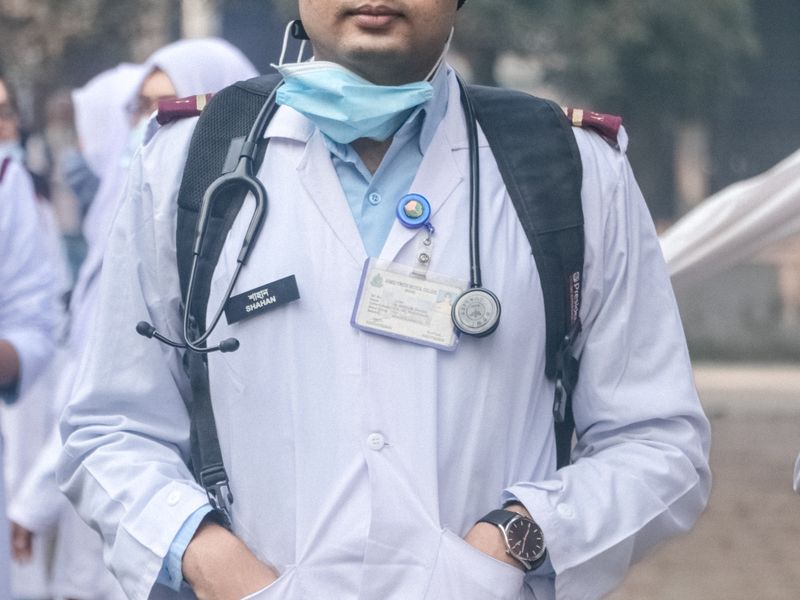
Every year, over 2,000 Bangladeshi students pack their bags and fly to China for an MBBS degree. That number keeps climbing, and honestly, it’s not hard to see why. Bangladesh produces around 12,000 HSC science graduates annually, but local medical colleges only have about 3,500 seats. The math is brutal — most students simply don’t get in at home. China fills that gap, and it does it well.
I’ve spent time talking to Bangladeshi students currently studying in cities like Nanjing, Wuhan, and Changchun. The feedback is surprisingly consistent. They chose China not just because it’s affordable — which it absolutely is — but because the teaching is in English, the universities are recognized by the Bangladesh Medical and Dental Council (BMDC), and the clinical exposure beats what many private colleges in Bangladesh offer. Let me walk you through everything you need to know for 2026.
Why Bangladeshi Students Choose China for MBBS
The BMDC has officially approved 43 medical universities in China that can enroll Bangladeshi students in English-medium MBBS programs. That’s 43 legitimate pathways to a medical degree that your home council will recognize. Compare that to just a handful of options in Bangladesh proper — and the difference in cost is staggering. A private medical college in Bangladesh will set you back roughly 25-35 lakh BDT over five years. In China, you’re looking at 18-24 lakh BDT total for the full six-year program, including accommodation.
Beyond the price tag, Chinese medical universities are globally recognized. Organizations like the World Health Organization (WHO), the World Directory of Medical Schools (WDOMS), and the Educational Commission for Foreign Medical Graduates (ECFMG) all list these institutions. That means your degree doesn’t just work in Bangladesh — it opens doors to the USMLE for America, PLAB for the UK, and other international licensing exams.
There’s also a strong Bangladeshi community in most Chinese university cities. In places like Ningxia Medical University or Shihezi University, you’ll find dozens of fellow Bangladeshis studying and living together. That makes the transition way easier than you’d expect.
Top BM&DC-Approved Universities for Bangladeshi Students
Here’s the thing — not every Chinese medical university can take Bangladeshi students. Only the 43 that BM&DC approved for the 2026-2027 academic year are valid. Below are some of the most popular choices, along with their allocated seats and annual fee ranges.
| University | Location | Seats (2026-27) | Annual Tuition (RMB) |
|---|---|---|---|
| Jilin University | Changchun | 100 | ~32,000 |
| China Medical University | Shenyang | 50 | ~38,000 |
| Dalian Medical University | Dalian | 120 | ~36,000 |
| Tianjin Medical University | Tianjin | 100 | ~35,000 |
| Fudan University | Shanghai | 40 | ~55,000 |
| Wuhan University | Wuhan | 50 | ~45,000 |
| Zhejiang University | Hangzhou | 180 | ~48,000 |
| Ningxia Medical University | Yinchuan | 100 | ~29,800 |
| Shihezi University | Xinjiang | 120 | ~30,000 |
| Nanjing Medical University | Nanjing | 60 | ~34,000 |
| Wenzhou Medical University | Wenzhou | 120 | ~33,000 |
| Shanghai Jiao Tong University | Shanghai | 30 | ~60,000 |
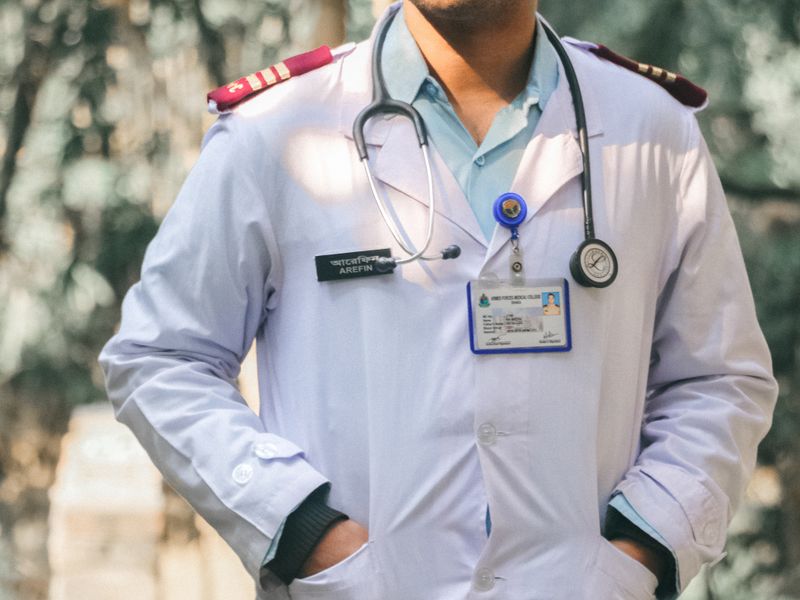
Ningxia Medical University and Shihezi University consistently come up as the budget-friendly champions. Their combined tuition and accommodation come to roughly 35,000 RMB (about 600,000 BDT) per year. That’s half of what you’d pay at a private college back home. Fudan and SJTU are at the top end — you’re paying for the brand name and Shanghai’s cost of living — but the quality is world-class.
Program Structure: What the 6 Years Look Like
The MBBS program in China runs for six years. The first year is mostly pre-clinical — anatomy, biochemistry, physiology, and some basic Chinese language. Yes, you read that right. You’ll need to pass HSK-4 (the fourth level of the Chinese proficiency test) before graduating. It sounds scary, but nearly every university offers free Mandarin classes from day one.
Years two through four are your core clinical sciences — pathology, pharmacology, microbiology, and system-based medicine. By year five, you’re in the hospital doing rotations. Year six is a full internship, usually at a teaching hospital affiliated with your university. The entire curriculum is taught in English, but your clinical rotations will expose you to Chinese-speaking patients. That’s why HSK-4 matters — you need it to take patient histories and write basic medical records.
One thing Bangladeshi students specifically appreciate: the exam schedule. Chinese medical universities have two main exam periods (midterms and finals), and most professors recognize that international students need extra support. Many offer review sessions in English before exams.
Eligibility Requirements for Bangladeshi Students
The admission criteria are straightforward but firm. Here’s what you need for the 2026-2027 intake:
- HSC/GPA requirement: Minimum GPA of 4.0 out of 5.0 in your SSC and HSC combined. Some top-tier universities ask for 4.5 or higher. You must have studied Physics, Chemistry, and Biology.
- Age: Between 16 and 25 years old on the application date.
- Health: A completed Foreigner Physical Examination Form showing you’re physically and mentally fit.
- English proficiency: No IELTS or TOEFL is required. The universities assess your English through your academic records and a possible video interview.
- CSCA exam: Some universities now ask for the CSCA (China Scholarship Council Assessment) results. The passing mark varies by institution.
- Character: A Police Character Certificate (non-criminal record) from your local authorities.
You’ll also need a bank statement showing at least $5,000 to $25,000 in your or your sponsor’s account. This is just to prove you can cover the first year’s expenses. Most universities also ask for a digital photo (white background, JPG format, 100-500KB).
Application Timeline and Process
Chinese medical universities accept applications twice a year. The main intake is Autumn (September semester), running from March 1 to October 30. The Spring intake (March semester) runs from November 1 to March 30, but fewer universities offer this option, and the seat availability is lower.
Here’s the step-by-step process you’ll go through:
- Choose your universities — pick 3-5 from the BMDC-approved list. Don’t put all your eggs in one basket.
- Submit your application — apply through each university’s international student portal. Expect an application fee of 1,000 RMB (about 18,000 BDT).
- Receive pre-admission letter — within 7 to 10 working days for most universities.
- Apply for JW202 form — this is the visa application form the university issues. This step takes the longest, often 6 to 8 weeks, so start early.
- Get your X1 student visa — take the admission letter and JW202 form to the Chinese Embassy in Dhaka.
- Fly to China and register — show up before the semester starts, register at the international student office, and move into your dorm.
Most students get their pre-admission letter within 7-10 days. The full processing time from application to visa approval is about 30-40 working days. If you’re aiming for September 2026 intake, I’d recommend starting your applications by April 2026 at the latest.
Complete Cost Breakdown
Let’s talk money — specifically, how much you’ll actually spend. I’ve broken this down into annual and six-year totals so you can plan realistically.
| Expense Category | Annual Cost (RMB) | Annual Cost (BDT) |
|---|---|---|
| Tuition + Accommodation (mid-range) | 35,000 – 45,000 | 600,000 – 800,000 |
| Food | 9,600 – 12,000 | 170,000 – 210,000 |
| Transportation (local) | 2,400 – 3,600 | 42,000 – 63,000 |
| Medical Insurance (mandatory) | 800 – 1,200 | 14,000 – 21,000 |
| Books & Supplies | 1,200 – 1,800 | 21,000 – 32,000 |
| Personal & Miscellaneous | 6,000 – 9,000 | 105,000 – 158,000 |
| Total per Year | 55,000 – 72,600 | 952,000 – 1,284,000 |
Over six years, you’re looking at roughly 330,000 to 435,600 RMB total — that’s about 5.7 to 7.6 lakh BDT. A private medical college in Bangladesh would cost you easily double that. And that’s without factoring in the scholarship opportunities.
Scholarships That Actually Pay
Several scholarship options can bring the cost down significantly:
- Chinese Government Scholarship (CSC): The big one. Covers full tuition, accommodation, monthly stipend (roughly 3,000 RMB), and medical insurance. Application runs January to April each year. Apply through the Chinese Embassy in Dhaka or directly through your target university.
- Belt and Road Initiative Scholarship: Partial to full tuition waivers for students from participating countries, Bangladesh included. Check with your university’s international office.
- Provincial Government Scholarships: Each province (Jiangsu, Liaoning, etc.) offers its own scholarships ranging from 5,000 to 15,000 RMB per year.
- University-Specific Scholarships: Many universities discount tuition by 30-50% for students with top HSC scores (GPA 4.5+ and strong PCB marks).
Life in China for Bangladeshi Students

Accommodation is typically in international student dormitories on campus. Standard rooms are twin-sharing with attached bathrooms, going for 4,000-9,000 RMB per year at most universities. Off-campus apartments are cheaper if you split with friends, but most first-years prefer the security and convenience of dorms.
Food is where you’ll find the biggest cultural shift. Chinese food is very different from Bengali cuisine — less spice, more oil-based cooking. But almost every university with a sizable South Asian community has halal food options near campus. In cities like Nanjing and Shanghai, you’ll find dedicated halal canteens. Many Bangladeshi students also learn to cook at home. Rice is available everywhere, so at least you won’t miss your staple food.
You’ll need WeChat from day one — it’s how everyone in China pays, messages, and even studies. Group chats for your class, your hostel, and your Bangladeshi community will all be on WeChat. Download it before you leave Dhaka.
After Graduation: Licensing and Career Path
Graduating from a BMDC-approved university in China means you can sit for the BMDC registration exam to practice in Bangladesh. You’ll also need to complete a one-year internship at a recognized hospital. Most Chinese MBBS graduates take the BMDC licensing exam within six months of returning home, and the pass rate for graduates from MOE-listed Chinese universities is solid — well above the average for other overseas programs.
If you’re thinking bigger — USMLE for the US, PLAB for the UK, or AMC for Australia — your Chinese MBBS degree qualifies you for all of them. The curriculum is designed with international standards in mind. Many Chinese university hospitals also have exchange programs with Western teaching hospitals, giving you a shot at clinical electives abroad.
Frequently Asked Questions
Is MBBS in China recognized by BMDC?
Absolutely. The BMDC has approved 43 Chinese universities for English-medium MBBS programs. Just make sure your chosen university is on that list before you apply.
Do I need IELTS to apply?
Nope. Chinese medical universities don’t require IELTS or TOEFL for Bangladeshi applicants. They assess your English through your academic transcripts and sometimes a short video interview.
How much does MBBS in China cost in total?
For a full six-year program, expect to spend 330,000 to 435,600 RMB. That’s roughly 5.7 to 7.6 lakh BDT including tuition, accommodation, food, and living costs. Scholarships can cut that by 30% to 100%.
Can I work part-time while studying?
Yes. China allows international students to work part-time on campus (up to 8 hours per week during semester, full-time during breaks). Off-campus work requires university permission, and it’s harder to get. Most Bangladeshi students focus on their studies — the MBBS curriculum is demanding enough without a side job.
Is the MBBS in China worth it compared to Bangladesh private colleges?
For most students, yes. You get a globally recognized degree, English-medium instruction, better clinical exposure, and lower total cost. The only downside is being away from family, but that’s true for any overseas program.
Which university is the cheapest for Bangladeshi students?
Ningxia Medical University and Shihezi University are the most affordable. Total annual cost (tuition + accommodation) is around 35,000 RMB — about 600,000 BDT per year. Ningxia is particularly popular among Bangladeshi students, with a large existing community.
Can I get a scholarship for MBBS in China?
Yes. The Chinese Government Scholarship (CSC) is the most comprehensive. Provincial and university-specific scholarships are also available. Apply early — the competition is real, but many Bangladeshi students secure partial or full funding each year.
What if I don’t pass HSK-4?
You won’t get your final degree certificate. You might get a temporary graduation certificate, but the formal degree is withheld until you pass HSK-4. It’s not optional — start learning Chinese from week one, and you’ll be fine.
How long does the visa process take?
Expect 6 to 8 weeks for the JW202 form from your university, plus 1-2 weeks for the X1 visa from the Chinese Embassy in Dhaka. Plan for at least 2.5 to 3 months total from application to departure.
Will I feel lonely in China?
Probably not for long. There’s a sizable Bangladeshi community at most universities. You’ll find fellow Bangladeshis at the airport pickup, in your dorm block, and in the halal canteen. Chinese students are generally curious and welcoming too — you’ll make local friends faster than you think.
Studying MBBS in China from Bangladesh is a straight path if you plan it right. Pick a BMDC-approved university, get your paperwork in order by April, and go in with an open mind about the language and culture. Thousands of Bangladeshi students have done it before you — and most of them will tell you it was the best decision they ever made.