
One of the first big decisions you will make as an international student in China is where to live. University dormitories and off-campus apartments both have their pros and cons, and the right choice depends on your budget, lifestyle, and what kind of experience you are after. Having been through the process myself and talked to dozens of fellow international students across different Chinese cities, I want to give you the real picture so you can decide with your eyes wide open.
This guide breaks down everything — costs, rules, facilities, location trade-offs, and practical steps — so you know exactly what to expect before you book anything.
University Dormitories: The Traditional Route
Most Chinese universities offer dedicated international student dormitories on campus. These are usually separate buildings from the Chinese student dorms, and they come with higher standards — think private bathrooms, air conditioning, and basic furniture. The big advantage is convenience: you roll out of bed and you are five minutes from your classroom, the library, and the cafeteria.
Costs vary wildly depending on the city and the university. In smaller cities like Kunming or Jinan, a double room in the international dorm might run you anywhere from 6,000 to 10,000 RMB per year. In Beijing or Shanghai, the same room can cost 15,000 to 25,000 RMB per year, and single rooms go up to 40,000 RMB or more at top universities like Tsinghua or Fudan. Most dorms include water and electricity within a reasonable cap, and internet is usually available through the campus network.
The downside? Rules. International dorms are stricter than you might expect. Curfews are common — some dorms lock the main gate at 11 PM or midnight. Visitors of the opposite gender are typically not allowed in rooms after a certain hour, and overnight guests are flat-out banned at most places. Laundry facilities can be limited, and kitchen access is rare in standard dorm buildings. If you value your freedom and want to cook your own food, dorm life might start to feel suffocating after a few months.
Off-Campus Apartments: Freedom and Flexibility
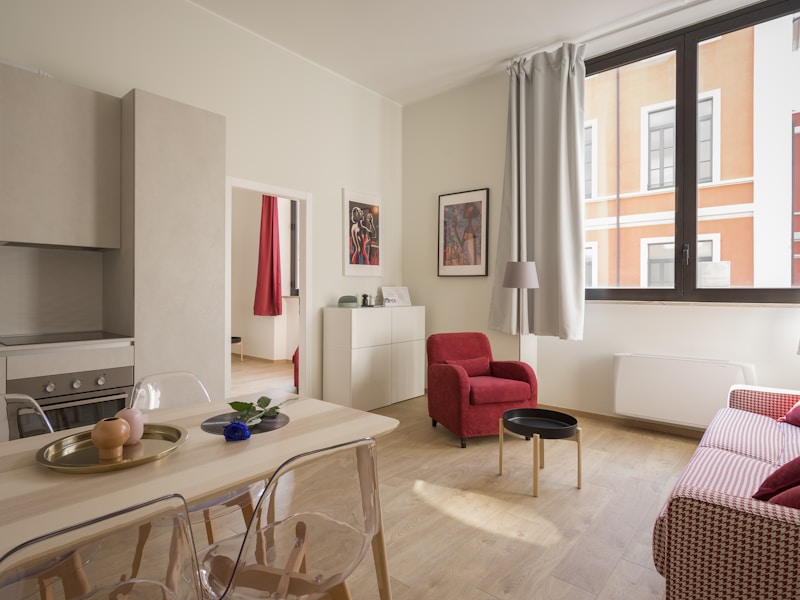
Renting an apartment off campus is the go-to choice for students who want more space, privacy, and control over their daily life. The rental market in Chinese cities is huge, and you can find everything from a studio in a modern high-rise to a shared apartment in an older “老小区” (old neighborhood) that is full of local character.
In second-tier cities like Chengdu, Nanjing, or Wuhan, a decent one-bedroom apartment near a university can cost between 2,000 and 4,000 RMB per month. In Beijing or Shanghai, the same apartment will run you 4,000 to 8,000 RMB depending on proximity to campus and the subway. If you share a three-bedroom apartment with two other students, you can bring that cost down significantly — expect 1,500 to 3,000 RMB per person in most cities.
Chinese apartments typically come unfurnished or semi-furnished. That means you might get a bed and a stove but need to buy your own desk, chair, fridge, and washing machine. This initial shopping trip to IKEA or a local appliance market can easily cost 3,000 to 5,000 RMB. Also keep in mind that most landlords ask for a deposit equivalent to one month’s rent, plus the first three months upfront. You will need a decent chunk of cash to get started.
Another thing people do not tell you: signing a lease as a foreigner is not always straightforward. Some landlords are happy to take international students, especially near university areas, but others will turn you down because they do not want to deal with the police registration paperwork. You are legally required to register your address with the local police station within 24 hours of moving in — this is a requirement tied to your visa, and skipping it can cause real problems.
The Hidden Costs You Need to Know About
Whether you choose a dorm or an apartment, there are costs that catch most first-time students off guard. In dorms, you may need to pay a separate fee for air conditioning usage — some universities charge per kilowatt-hour above a free monthly allowance. In winter in the north, central heating is included in most dorms, but in the south where buildings do not have central heating, your electric bill can spike when you run a heater.
For apartments, utility bills are your own responsibility. Electricity in China costs roughly 0.5 to 1 RMB per kWh. Water is cheap — maybe 50 to 100 RMB per month. But internet will run you 100 to 200 RMB per month for a decent fiber connection. And if your apartment uses gas for cooking and hot water, factor in another 50 to 100 RMB per month. Altogether, budget about 300 to 500 RMB per month for utilities in an apartment.
There is also the matter of agency fees. If you use a real estate agent to find an apartment — and you probably should, because searching on Chinese apps without Chinese language skills is painful — the standard fee is one month’s rent. Some agencies try to charge 50% or 70%, but 100% is the norm in most cities. Negotiate, but do not expect much flexibility.
Which Chinese Apps Do You Need for Renting?
If you decide to go the apartment route, you need to know the right tools. The big three rental platforms in China are Beike (贝壳找房), Lianjia (链家), and Ziroom (自如). Beike and Lianjia are essentially the same company and have the most listings. Ziroom specializes in curated, fully furnished apartments aimed at young professionals — they are pricier but much more foreigner-friendly.
Anjuke (安居客) is another option with tons of listings, but be careful — it is known for fake listings posted by agents trying to collect your phone number. Always verify a listing exists before you go to see it. If you can read Chinese, 58.com (58同城) has direct-from-owner listings, but sorting through the spam takes effort.
For most international students, I recommend starting with Ziroom if your budget allows. Their apartments are consistently furnished, they handle the police registration, and they have customer service in English at some of their branches. It is not the cheapest option, but it saves you a massive headache.
What About the Campus Location?
Chinese universities can be enormous, and campus location matters more than you might think. Some universities have multiple campuses — for example, Zhejiang University has seven campuses spread across Hangzhou. Your classes might be at Zijingang campus, but the international student dormitory could be at Yuquan campus, 40 minutes away by bus. Always check which campus your department is on before you rent an apartment.
If you live off campus, being close to a subway station is essential. China’s metro systems are excellent in most major cities. A 10-minute walk to the station and a 20-minute ride to campus is standard for students living off campus. Bike-sharing (HelloBike, Meituan Bike) is cheap and fills the “last mile” gap. A monthly bike pass costs about 15 to 20 RMB and is honestly one of the best investments you will make.
Safety and Practical Tips
China is generally very safe, and both dorms and apartments are secure. University dorms have 24/7 security guards and CCTV. Apartment buildings usually have a security desk and require a keycard or face scan to enter. Violent crime is extremely rare compared to most Western countries. That said, petty theft happens — do not leave your laptop unattended in a common area, and lock your door at night.
One practical tip: if you live in an apartment, make friends with a Chinese classmate or neighbor who can help you communicate with the landlord. Even basic maintenance requests can be frustrating when neither you nor the landlord speaks the other’s language. Having a bilingual friend on speed dial is worth more than you can imagine.
Another thing: check the water heater before you sign anything. Some older apartments have small electric water heaters that only give you 10 minutes of hot water — not ideal when it is zero degrees outside and you want a proper shower. Gas water heaters are much better and more common in newer buildings.
Visa and Registration Requirements
This is the part nobody wants to deal with but everybody has to. If you live in a university dormitory, the international student office handles your residence registration automatically. You just give them your passport, and they do the rest. It is one of the biggest conveniences of dorm life.
If you live off campus, you must register your address at the local police station (派出所) within 24 hours of moving in. Bring your passport, your lease contract, and a copy of your visa. The registration is free, and the process takes about 15 minutes if you go during non-peak hours. The police station will give you a small slip of paper — keep it with your passport. You will need it every time you extend your visa or leave and re-enter the country.
Some landlords refuse to let international students rent because they do not want to deal with the police registration obligation. This is illegal discrimination, but it happens. If a landlord says no, just move on and find someone who is willing — there are plenty of properties that welcome foreign tenants.
So Which One Should You Choose?
Here is my honest take. For your first semester in China, live in the university dormitory. It gives you an instant social network, it is the easiest option logistically, and you can focus on settling in without dealing with landlords, utility bills, and registration paperwork. After one semester, you will have a much better sense of the city and whether you want the independence of your own apartment.
If you are coming for a full degree program (undergraduate or master’s) and plan to stay for several years, switching to an off-campus apartment after the first year is a great move. You will save money if you share with roommates, you will have real freedom with your schedule, and cooking your own meals is a huge cost saver — eating out three times a day in China runs about 40 to 60 RMB daily, while cooking at home can cut that in half.
Ultimately, there is no wrong answer. Both options work. The important thing is to know what you are signing up for and to plan your budget realistically. Housing is one of the biggest expenses of your time as a student in China, but with the right approach, you can find something that fits your needs without breaking the bank.