

Choosing the right business program in China can feel overwhelming. There are MBAs, Masters in Management (MiM), Finance degrees, and Supply Chain programs — each promising different outcomes. With tuition ranging from ¥20,000 to over ¥100,000 per year, the financial commitment is significant. So which one is actually worth it?
This article breaks down each program type in detail — curriculum, career outcomes, cost, and ROI — so you can make an informed decision based on your background, budget, and career goals.
1. MBA in China: The Premium Option for Experienced Professionals
China’s top MBA programs — at CEIBS, Tsinghua, Peking University, and Shanghai Jiao Tong University — are among the best in Asia. They are designed for professionals with 3-5+ years of work experience who want to accelerate into leadership roles.
Program Structure
- Duration: 12-24 months (full-time), 24-36 months (part-time/executive)
- Teaching language: English or Chinese (bilingual tracks available)
- Curriculum focus: Leadership, strategy, finance, entrepreneurship, global business
- Class profile: Average 28-32 years old, 5-7 years work experience, diverse industries
Tuition and ROI
| Program | Tuition (CNY) | Duration | Avg. Post-MBA Salary | ROI Period |
|---|---|---|---|---|
| CEIBS MBA (Shanghai) | ¥498,000 | 16-18 months | ¥600,000-900,000/yr | 1-2 years |
| Tsinghua-MIT MBA | ¥388,000 | 24 months | ¥500,000-700,000/yr | 1.5-2 years |
| PKU Guanghua MBA | ¥368,000 | 24 months | ¥450,000-650,000/yr | 1.5-2.5 years |
| SJTU Antai MBA | ¥328,000 | 24 months | ¥400,000-600,000/yr | 1.5-2.5 years |
Who Should Apply?
The MBA is best for mid-career professionals — typically with 4+ years of management or specialized experience — who want a significant career shift or salary jump. If you already have work experience and see yourself in a C-suite or senior management role within 5 years, the MBA is your best bet despite the higher upfront cost.

2. Master in Management (MiM): The Fast Track for Fresh Graduates
The Master in Management (MiM) is a relatively new but rapidly growing program type in China. Unlike the MBA, it is designed for students with little to no work experience — usually fresh undergraduates who want a competitive edge in the job market.
Program Structure
- Duration: 1-2 years
- Teaching language: English-taught programs widely available
- Curriculum focus: General management, organizational behavior, marketing, accounting, business strategy
- Class profile: Average 21-24 years old, 0-2 years work experience
Top MiM Programs in China
| University | Program Name | Tuition (CNY/yr) | Duration |
|---|---|---|---|
| Tsinghua SEM | MIM (CEMS alliance) | ¥48,000 | 2 years |
| PKU HSBC Business School | Master of Management | ¥42,000 | 2 years |
| Fudan University | International MIM | ¥40,000 | 2 years |
| Zhejiang University | Master of Management | ¥38,000 | 2 years |
Who Should Apply?
The MiM is ideal for recent undergraduates who studied a non-business field (engineering, sciences, humanities) and want to pivot into business roles. The lower tuition (¥38,000-48,000 per year) and shorter duration make it a cost-effective option. Starting salaries average ¥180,000-250,000 per year — not as high as MBA graduates, but considering the zero work experience entry point, the ROI is excellent over a 5-year horizon.
3. Finance Degrees in China: Specialized, High-Demand, High-Reward
China’s financial sector has grown explosively over the past decade. Shanghai is now one of the world’s top financial centers, and Beijing houses the headquarters of China’s largest banks and investment firms. Finance degrees at Chinese universities reflect this — they are rigorous, quantitative, and directly tied to industry.
Program Structure
- Duration: 2 years (master’s), 4 years (bachelor’s)
- Core courses: Corporate finance, investment analysis, derivatives, risk management, financial econometrics
- Specializations available: International finance, fintech, quantitative finance, banking
- Language options: Both English and Chinese tracks available at top universities
Top Finance Programs
- Shanghai Jiao Tong University Antai: Master of Finance (¥42,000/yr). Strong placement in Shanghai’s banking and securities firms.
- Peking University HSBC Business School (Shenzhen): Master of Finance (¥45,000/yr). Focus on international finance with bilingual curriculum.
- Tsinghua University PBCSF: Master of Finance (¥48,000/yr). The most prestigious finance program in China, with direct pipeline to China’s central bank and top-tier investment banks.
- Shanghai University of Finance and Economics (SUFE): Master of Finance (¥35,000/yr). Excellent value-for-money option with strong alumni network in Shanghai’s financial district.
Career Outcomes
Finance graduates from top Chinese universities command starting salaries of ¥200,000-400,000 per year. Investment banking, asset management, and fintech are the most lucrative paths. Over 5 years, top performers can reach ¥600,000-1,000,000 per year. The key advantage of a finance degree is the deep specialization — it creates a clear career track that general management degrees do not.
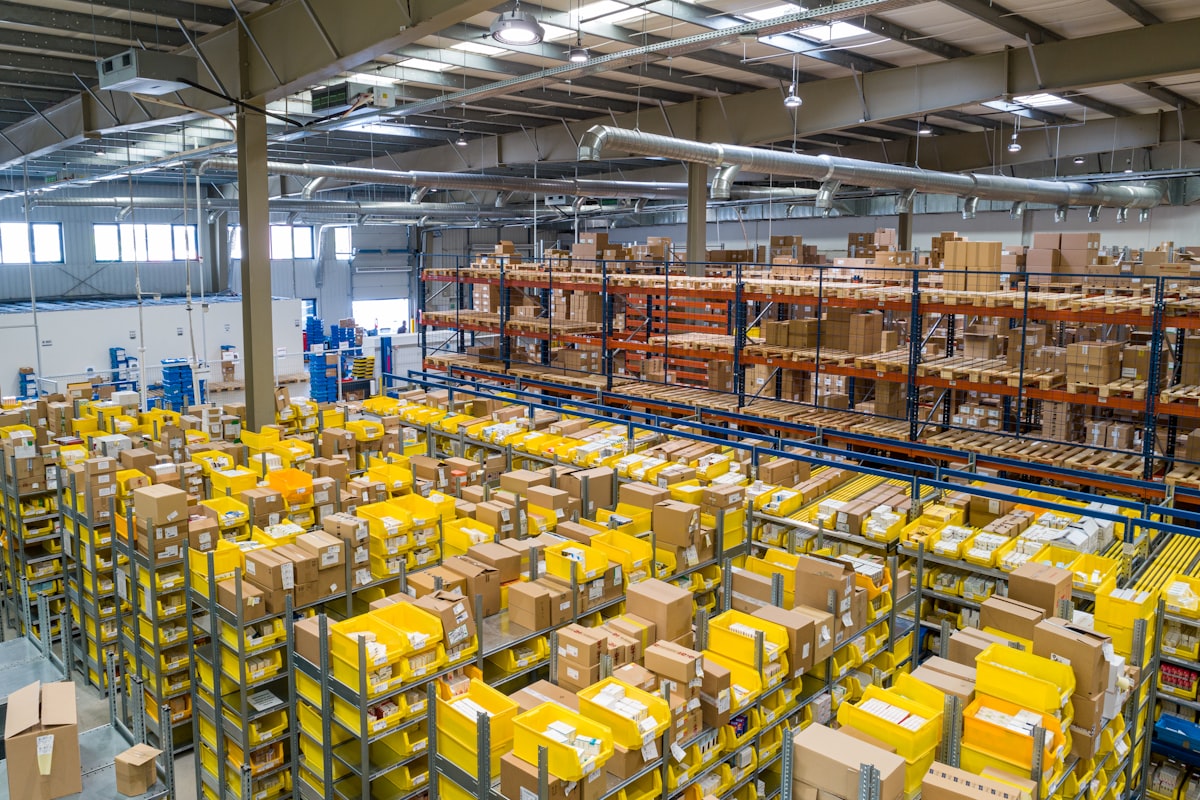
4. Supply Chain Management: The Unsung Hero with Growing Demand
Supply chain management (SCM) is arguably the most underrated business specialization in China. After the global supply chain disruptions of 2020-2023, companies worldwide realized that China’s supply chain expertise is irreplaceable. This created massive demand for graduates who understand how China’s manufacturing and logistics systems work.
Program Structure
- Duration: 2-4 years (bachelor’s), 2 years (master’s)
- Core courses: Logistics management, procurement, operations research, inventory control, global trade regulations
- Industry exposure: Internships at ports, warehousing hubs, manufacturing facilities
- Language: English-taught programs available; some Chinese language recommended for field placements
Top Programs
- SJTU Antai: Supply Chain Management specialization (¥42,000/yr). Shanghai’s position as the world’s busiest container port makes this a natural choice.
- UIBE (Beijing): International Supply Chain Management (¥35,000/yr). Strong ties with China’s customs and trade authorities.
- Dalian Maritime University: Logistics Engineering & Management (¥28,000/yr). Specialized in maritime logistics and port operations.
- Huazhong University of Science & Technology: Logistics Management (¥30,000/yr). Strong focus on manufacturing supply chains in central China.
Career Outcomes
Supply chain graduates start at ¥150,000-250,000 per year, with faster-than-average promotion cycles. After 5 years, experienced supply chain managers at companies like JD Logistics, SF Express, and global firms operating in China earn ¥300,000-500,000 per year. The field also offers strong international mobility — supply chain skills are transferable across countries and industries.
5. Head-to-Head Comparison: Which Program Wins?
| Factor | MBA | MiM | Finance | Supply Chain |
|---|---|---|---|---|
| Entry experience | 3-7 years | 0-2 years | 0-2 years | 0-2 years |
| Avg. tuition (CNY/yr) | ¥180,000-250,000 | ¥38,000-48,000 | ¥35,000-48,000 | ¥28,000-42,000 |
| Starting salary | ¥450,000-900,000 | ¥180,000-250,000 | ¥200,000-400,000 | ¥150,000-250,000 |
| 5-year salary potential | ¥800,000-1,500,000 | ¥350,000-500,000 | ¥600,000-1,000,000 | ¥300,000-500,000 |
| Career flexibility | ★★★★★ | ★★★★ | ★★★ | ★★★ |
| International mobility | ★★★★★ | ★★★★ | ★★★ | ★★★★ |
| Best for | Mid-career professionals | Fresh graduates | Quant-oriented students | Operations-minded students |
6. ROI Analysis Over 5 Years
Using conservative estimates, here is the total cost vs. cumulative earnings over 5 years post-graduation for each program type (study period + 5 years of work):
| Program | Total Tuition | 2-Year Living Cost | Total Cost | 5-Year Earnings | Net ROI |
|---|---|---|---|---|---|
| MBA (CEIBS) | ¥498,000 | ¥120,000 | ¥618,000 | ¥3,500,000 | ¥2,882,000 |
| MiM (Tsinghua) | ¥96,000 | ¥120,000 | ¥216,000 | ¥1,400,000 | ¥1,184,000 |
| Finance (Tsinghua PBCSF) | ¥96,000 | ¥120,000 | ¥216,000 | ¥2,000,000 | ¥1,784,000 |
| Supply Chain (SJTU) | ¥84,000 | ¥120,000 | ¥204,000 | ¥1,250,000 | ¥1,046,000 |
Key takeaway: While the MBA delivers the highest absolute earnings, the MiM offers the best risk-adjusted ROI for early-career students given its low cost. Finance offers the best earnings-to-cost ratio among specialized degrees. Supply chain is the most affordable entry point with stable demand.
7. Application Strategy: Picking the Right Program
Here is a simple decision framework based on your profile:
- You have 4+ years of work experience and want a leadership role: Apply for an MBA at CEIBS, Tsinghua, or PKU. The cost is high, but the salary jump is real.
- You just finished your bachelor’s degree (any field): Choose a MiM program. It gives you broad business knowledge without requiring work experience. Tsinghua’s CEMS MiM is the gold standard.
- You have strong quantitative skills and want high pay: Choose a Finance degree. It requires math aptitude but pays well from day one.
- You enjoy logistics, operations, and want a stable global career: Choose Supply Chain Management. It is the most affordable option with growing demand and excellent international mobility.
No matter which path you choose, studying business in China offers unique advantages — access to the world’s second-largest economy, exposure to cutting-edge digital ecosystems, and a low-cost, high-quality education system. The key is matching the program to your specific career stage and goals.