
A few years back, I met a guy from Italy who had spent a year at Beijing Language and Culture University. When he spoke Chinese, I honestly thought he’d been studying for five years. His tones were clean, his sentences flowed naturally, and he casually dropped idioms I didn’t even know. That’s when I realized BLCU isn’t just another university with a Chinese program — it’s basically the headquarters for teaching Chinese to foreigners.
BLCU, also known as Běijīng Yǔyán Dàxué, has been around since 1962, and it’s earned the nickname “Mini United Nations” for a good reason. Over 8,000 international students from 170+ countries walk through its gates every year. You’d be hard-pressed to find another campus where you can hear Korean, Spanish, Arabic, and Thai all in one cafeteria at lunchtime.
The Programs That Matter
BLCU offers three main tracks for beginners and advanced learners alike. The most popular is the General Chinese Language Program, which runs on a semester basis — spring from March to July, fall from September to January — and costs around 10,400 RMB per semester. If you’re in it for the long haul, the long-term Chinese program runs for a full academic year at about 20,800 RMB, which covers roughly 20 classroom hours per week.
For those who want a quick taste, the short-term summer and winter programs pack 4 to 8 weeks of intensive study. These run about 4,000–6,000 RMB depending on the duration. Students who go through the summer track typically report jumping one full HSK level by the end. That’s not bad for two months of work.
On the academic side, BLCU also offers a Bachelor’s in Chinese Language (four years, roughly 23,000 RMB per year) and a Master’s in Teaching Chinese to Speakers of Other Languages. These are solid options if you’re planning to make Chinese part of your career rather than just a skill on your resume.
What Makes BLCU Different
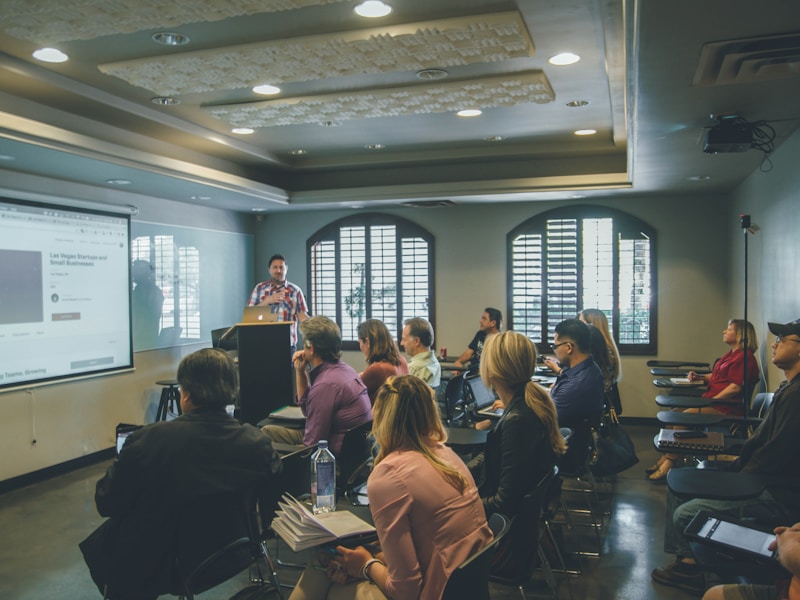
Here’s the thing about learning Chinese in a mixed international environment — it helps, but it’s not the same as being forced to speak Chinese every day. At BLCU, the class sizes are small, usually 10–15 students per group, which means you get plenty of speaking time. Teachers use the “communicative method” — you’re not just memorizing characters from a textbook, you’re acting out dialogues, giving mini-presentations, and writing short skits.
The campus sits in the Wudaokou area of Haidian District, which is basically Beijing’s student central. Tsinghua and Peking University are a 10-minute bike ride away. That matters because you can audit lectures at nearby universities, join student clubs that aren’t available at BLCU, and generally surround yourself with young people who are actively studying. In other words, even outside class, you’re in a learning environment.
Dorm life at BLCU is another experience worth mentioning. The international student dormitories offer double rooms for around 40–80 RMB per day depending on the building, with basic amenities like WiFi, air conditioning, and shared kitchens. Most students I’ve talked to say the social value of dorm life — late-night language exchanges, cooking together, exploring the city on weekends — is just as valuable as the classroom hours.
The HSK Track Record
Numbers-wise, BLCU consistently produces some of the highest HSK pass rates among Chinese language institutions in China. Around 85% of long-term program students pass HSK 4 after one academic year of full-time study. HSK 4 is the level where you can comfortably discuss work, travel, and daily life in Chinese — it’s also the minimum requirement for most Chinese university degree programs taught in Chinese.
By the second year, many students reach HSK 5, which opens up direct entry into Chinese-taught bachelor’s programs at other universities. There are BLCU alumni now studying medicine at Peking University, engineering at Tsinghua, and business at Fudan — all because they built their Chinese foundation at BLCU first.
Visas and Practical Stuff
BLCU’s long-term and degree programs come with an X1 visa, which you convert to a residence permit within 30 days of arriving in China. Short-term programs (under 180 days) work with an X2 visa. The university’s International Student Office handles most of the paperwork, and they’re generally faster than what you’d get at bigger universities simply because BLCU processes thousands of student visas every year — they’ve got the system down.
Tuition is paid per semester or per year upfront. On top of the course fees, budget around 2,000–3,000 RMB per semester for textbooks, activity fees, and insurance. Living expenses in Beijing — food, transport, entertainment — run roughly 2,000–3,500 RMB per month depending on your lifestyle. Compared to tuition at language schools in the US or Europe, this is honestly a steal.
Frequently Asked Questions
Can I start at BLCU with zero Chinese?
Absolutely. The beginner track assumes you know nothing except maybe “nǐ hǎo” and “xiè xiè.” They place you based on a placement test during orientation, so even people with some background don’t end up bored.
Is BLCU better than studying Chinese at Peking University or Tsinghua?
Depends on what you want. PKU and Tsinghua have stronger names overall, but their Chinese language programs are side offerings. BLCU’s entire identity is built around teaching Chinese to foreigners. The teachers, the curriculum, the pace — everything is designed for language learners. If your main goal is learning Chinese well and fast, BLCU is the better pick.
What’s the age range at BLCU?
It’s wide — 18 to 50+, honestly. The long-term program skews younger (university-aged), but the short-term and advanced programs pull in working professionals, diplomats, and even retirees who finally have time to learn Chinese properly.
Do I need to know Chinese to apply for a visa?
No. The application and visa process can be done entirely in English. BLCU’s admission office handles international applications in English and Chinese.
Is Beijing a good city for a language learner?
The standard Mandarin spoken in Beijing is about as close to “textbook Chinese” as you’ll get. You’ll hear erhua endings and some local slang, but mostly people speak standard pǔtōnghuà. Plus, the city is packed with museums, hutong alleys, and cultural sites that make learning feel less like studying and more like exploring.