

More international students than ever are choosing China for their university education — not just for a degree, but for the opportunity to learn Chinese at the same time. Over 500,000 international students studied in China in 2025, and nearly 60% of them enrolled in English-taught programs while taking Chinese language classes on the side.
It sounds ideal. You get a globally recognized degree taught in English, plus daily immersion in the world’s most spoken language. But balancing a demanding academic program with serious Chinese language study is harder than it looks. Classes pile up. HSK prep gets pushed aside. By graduation, many students end up with conversational Chinese but not the fluency they wanted.
This guide covers exactly how to combine an English-taught degree with Chinese language learning in China — which universities offer the best setup, how to structure your schedule, and what strategies actually work.
Why Combine an English-Taught Degree with Chinese?
There is a clear career advantage to graduating with both a Western-style degree and Chinese proficiency. Employers in Asia — and increasingly around the world — value candidates who can operate in both English and Chinese business environments. A graduate who understands engineering in English and can negotiate with Chinese suppliers in Mandarin is worth significantly more than one who only speaks English.
Data from LinkedIn and Chinese job platforms shows that bilingual graduates in China earn 30-60% more than their English-only peers in the first five years. In fields like international trade, logistics, finance, and tech, the premium is even higher.
Beyond the career angle, studying your major in English while living in China gives you the best of both worlds. You avoid the academic struggle of learning complex technical terms in Chinese (imagine studying medicine or engineering in a foreign language from day one), while still getting daily practice in real-world Chinese through living, shopping, traveling, and socializing.
How Chinese Universities Structure Dual-Language Study
Most Chinese universities offer English-taught programs with optional or required Chinese language courses. The setup varies depending on the university and program type.
Model 1: Integrated Language + Major (Best for Commitment)
Some universities require international students in English-taught programs to take Chinese language classes as part of their curriculum. Tsinghua University’s English-taught undergraduate programs, for example, require all international students to complete at least 6 credits of Chinese language courses per semester. Peking University offers a similar model where Chinese language is built into the first two years of English-taught programs.
This model works well because Chinese class is not optional — it is scheduled into your week like any other course. You cannot skip it when assignments pile up. The trade-off is a heavier course load (4-6 extra hours per week of Chinese class).
Model 2: Optional Language Courses (Most Common)
The majority of Chinese universities offer Chinese language courses as optional add-ons to English-taught programs. You register separately through the International Students Office or the university’s language center. Classes are usually held in the late afternoon or evening, so they do not conflict with your major courses.
Shanghai Jiao Tong University, Zhejiang University, and Fudan University all offer this setup. The advantage is flexibility — you choose how many hours per week of Chinese to take. The disadvantage is that when your major workload spikes, Chinese class is often the first thing dropped.
Model 3: Self-Study + Tandem Learning (Most Flexible)
Some students choose not to enroll in formal Chinese classes at all. Instead, they learn through language exchange partners (tandem learning), online apps, and daily life exposure. This works best for students who are already at an intermediate level (HSK 3+) and can maintain self-discipline.
Most universities have language exchange programs that pair international students with Chinese students who want to practice English. It is free and flexible, but depends heavily on finding the right partner and maintaining a consistent schedule.
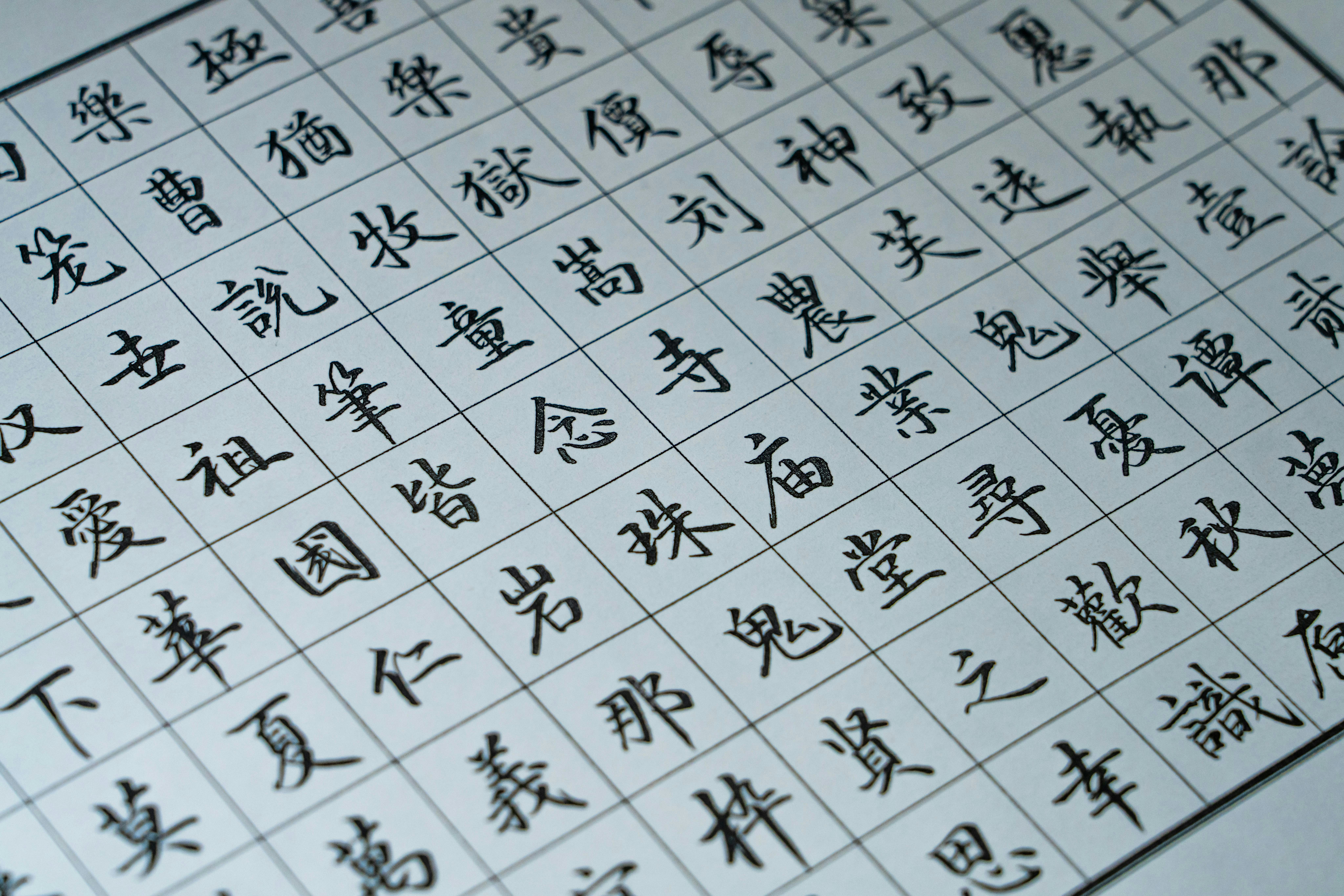
Best Universities for Dual English-Chinese Study in 2026
Here are the universities that offer the strongest combination of English-taught programs and Chinese language learning support:
| University | English Programs | Chinese Classes | Annual Tuition (CNY) |
|---|---|---|---|
| Tsinghua University | Engineering, Economics, Architecture | Required 6 credits/semester | ¥30,000-40,000 |
| Peking University | Business, International Relations, Law | Built-in first 2 years | ¥28,000-38,000 |
| Fudan University | Medicine, Economics, Management | Optional evening classes | ¥26,000-36,000 |
| Shanghai Jiao Tong University | Engineering, Business, Medicine | Language center add-on | ¥25,000-35,000 |
| Zhejiang University | Engineering, Computer Science | Optional + language exchange | ¥24,000-34,000 |
| BLCU | Chinese language (specialized) | World-class language teaching | ¥26,000 |
Sample Schedules: How to Balance Both
The biggest challenge is time management. Here are two sample weekly schedules that work for students combining an English-taught degree with Chinese language study:
Schedule A: Freshman/Sophomore — Build Your Foundation
| Time | Monday | Tuesday | Wednesday | Thursday | Friday |
|---|---|---|---|---|---|
| 08:00-10:00 | Major Course | Major Course | Major Course | Major Course | Major Course |
| 10:00-12:00 | Chinese Class | Chinese Class | Chinese Class | Chinese Class | Chinese Class |
| 14:00-17:00 | Study/Homework | Study/Homework | Language Exchange | Study/Homework | Free |
| Evening | Review Chinese | 10 new characters | Chinese TV show | 10 new characters | Weekend plans |
Weekly Chinese class hours: 10. Self-study: 6-8. Total: 16-18 hours of Chinese per week.
Schedule B: Junior/Senior — Maintain While Specializing
| Time | Monday | Tuesday | Wednesday | Thursday | Friday |
|---|---|---|---|---|---|
| 08:00-12:00 | Major Course | Major Course | Major Course | Major Course | Major Course |
| Afternoon | Lab/Project | Chinese (2h) | Lab/Project | Chinese (2h) | Language Exchange |
Weekly Chinese class hours: 4. Self-study: 4-6. Total: 8-10 hours of Chinese per week.

Practical Strategies That Work
Here are strategies that real students have used to successfully balance an English-taught degree with Chinese language learning:
1. Front-Load Your Chinese Learning
The first year is the best time to push hard on Chinese. Your major courses are still introductory, and you have the most flexibility. Take 10-15 hours of Chinese class per week in year one. Aim to reach HSK 4 by the end of your first year. Once you reach intermediate level, you can reduce to 4-6 hours per week and maintain through self-study and daily exposure.
2. Use Chinese for Daily Life, Not Just Class
Switch your phone to Chinese. Order food in Chinese. Watch Chinese YouTube or Bilibili videos. The students who improve fastest are not the ones with the best textbooks — they are the ones who use Chinese as a tool in daily life. Even if your major is taught in English, your life outside the classroom should be in Chinese as much as possible.
3. Find a Consistent Language Partner
A weekly language exchange session (30 minutes English, 30 minutes Chinese) is one of the most effective ways to improve speaking fluency. Most Chinese university students want to practice English, so finding a partner is easy. The key is consistency — meet at the same time every week, and do not cancel.
4. Set HSK Milestones
Register for HSK exams in advance so you have concrete deadlines. A typical timeline: HSK 3 by end of year 1, HSK 4 by end of year 2, HSK 5 by graduation. Having exam dates in your calendar creates accountability that self-study alone cannot provide.
5. Choose Your Major Wisely
Some majors leave more room for language learning than others. Engineering and Computer Science programs are demanding but often have more flexible elective slots in the first two years. Medicine programs are notoriously time-intensive and leave little room for language classes. Business and Economics programs tend to offer the best balance — manageable workload plus built-in Chinese language requirements at many universities.
Scholarships for Dual-Language Students
Good news: many scholarships specifically support international students who want to combine their degree with Chinese language study.
- Chinese Government Scholarship (CSC): The most comprehensive option. Covers full tuition, accommodation, living stipend (¥3,000/month for undergraduates), and medical insurance. Many CSC recipients are required to complete a one-year Chinese language preparatory course before starting their degree program — which is exactly what dual-language students need.
- Confucius Institute Scholarship: Primarily for Chinese language study, but can be used for one-year language preparation before an English-taught degree program. Covers tuition, accommodation, and a living stipend of ¥2,500/month.
- University-Specific Scholarships: Tsinghua, PKU, and Fudan all offer partial or full tuition scholarships for outstanding international students. Some of these (like Tsinghua’s “Excellent International Student Scholarship”) explicitly consider Chinese language proficiency as a factor.
- Provincial Scholarships: Beijing, Shanghai, Zhejiang, and Jiangsu governments offer scholarships that can cover 50-100% of tuition for international students studying at local universities.
Common Mistakes and How to Avoid Them
- Mistake: Trying to do everything at once. Do not sign up for 20 hours of Chinese class in your first semester while taking a full engineering course load. You will burn out. Start with 8-10 hours and adjust.
- Mistake: Only studying Chinese in class. Class is where you learn grammar and structure. Real fluency comes from using the language outside. Make Chinese friends, join clubs, go to local markets.
- Mistake: Dropping Chinese when coursework gets heavy. It is tempting to pause Chinese classes during exam periods. Instead of stopping completely, reduce to 2 hours per week — just enough to maintain momentum.
- Mistake: Choosing a university based only on ranking. A top-10 university with weak language support is worse than a top-50 university with excellent Chinese language programs. Research the language center before applying.
- Mistake: Staying in the international student bubble. It is easy to spend all your time with English-speaking friends. Force yourself into Chinese-speaking environments. Live with a Chinese roommate if possible.
Real Student Stories
Ahmed from Pakistan — B.Eng. Mechanical Engineering at SJTU
“When I started my engineering program at SJTU in 2023, I could barely say ‘ni hao.’ I took Chinese classes every morning before my engineering lectures. By year two, I passed HSK 4. By year three, I was doing my internship at a Shanghai manufacturing company where my manager only spoke Chinese. That internship turned into a job offer. My engineering degree got me the interview. My Chinese skills got me the job.”
Maria from Brazil — BBA at Fudan University
“I chose Fudan because they offer optional Chinese classes in the evenings. I took 6 hours per week in my first year and passed HSK 3. In my second year, I joined a language exchange program and met my best Chinese friend. We still practice — 30 minutes English, 30 minutes Chinese — every Friday. Now in my final year, I am HSK 5 and interviewing at Chinese companies in Shanghai.”
Final Advice
Combining an English-taught degree with Chinese language learning is not easy. It requires discipline, good scheduling, and the willingness to be a beginner in a language while already navigating a demanding academic program. But the payoff is enormous. You graduate with a degree from a Chinese university, fluency in the world’s most spoken language, and a resume that stands out to employers globally.
Start with a realistic plan. Front-load your Chinese learning in year one. Find a language partner early. Set HSK deadlines. And remember — you do not need to be fluent by graduation. You just need to be good enough to keep learning on the job.