
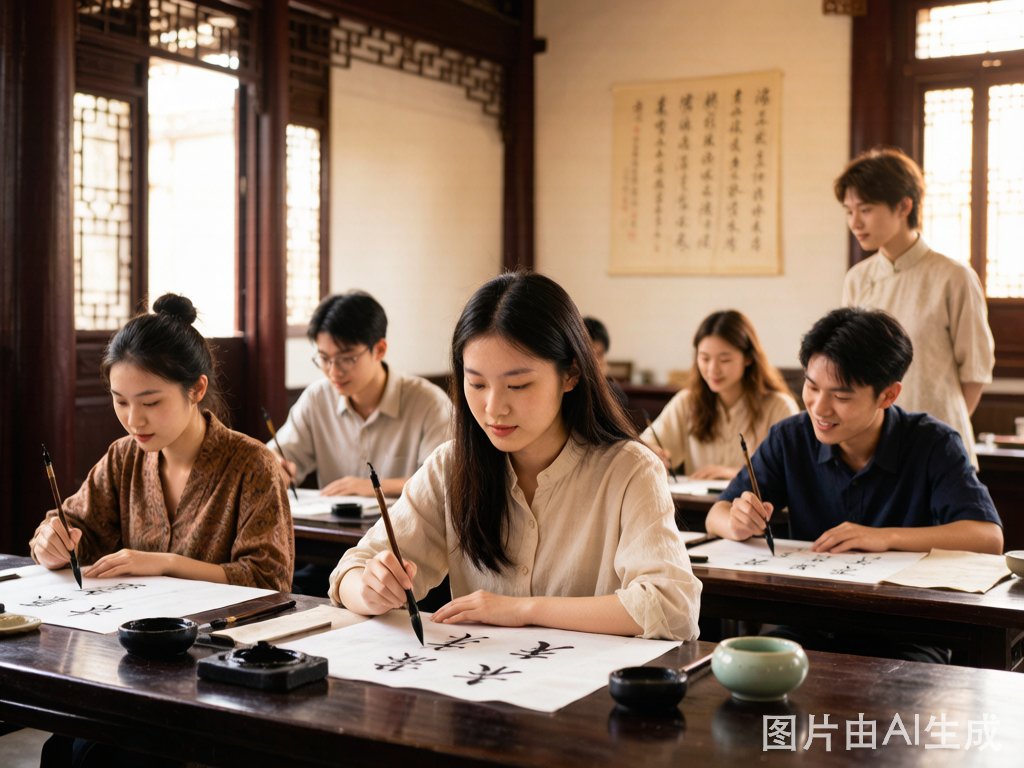
Why Learning Chinese in China Makes Sense for Thai Students
If you are a Thai student thinking about learning Mandarin, there’s really no better place than China itself. I know that sounds obvious, but hear me out. Over the past few years, the number of Thai students heading north to study Chinese has climbed steadily. And it’s not hard to see why. China and Thailand share close economic ties — Chinese companies are everywhere in Bangkok, Rayong, and Chiang Mai. Knowing the language gives you a serious edge whether you want to work in tourism, trade, logistics, or even tech.
Besides the career side of things, there’s something else worth mentioning. Thai people and Chinese people just click culturally. The food feels familiar (rice and noodles every day), the weather in southern China is not far off from what you are used to back home, and people are generally warm and welcoming. It’s not like moving to a completely foreign world. You will find Thai communities in most major Chinese cities, especially in Kunming, which is literally a two-hour flight from Bangkok. Some students joke that they go home for the weekend more often than their friends studying in Chiang Rai.
On top of that, the Chinese government has made it pretty easy for Thai students to get scholarships. There are over 217 different scholarships specifically available for Thai applicants, and more than a hundred of those cover everything — tuition, accommodation, living expenses, the works. So cost does not have to be a dealbreaker. Let’s break down what you actually need to know.
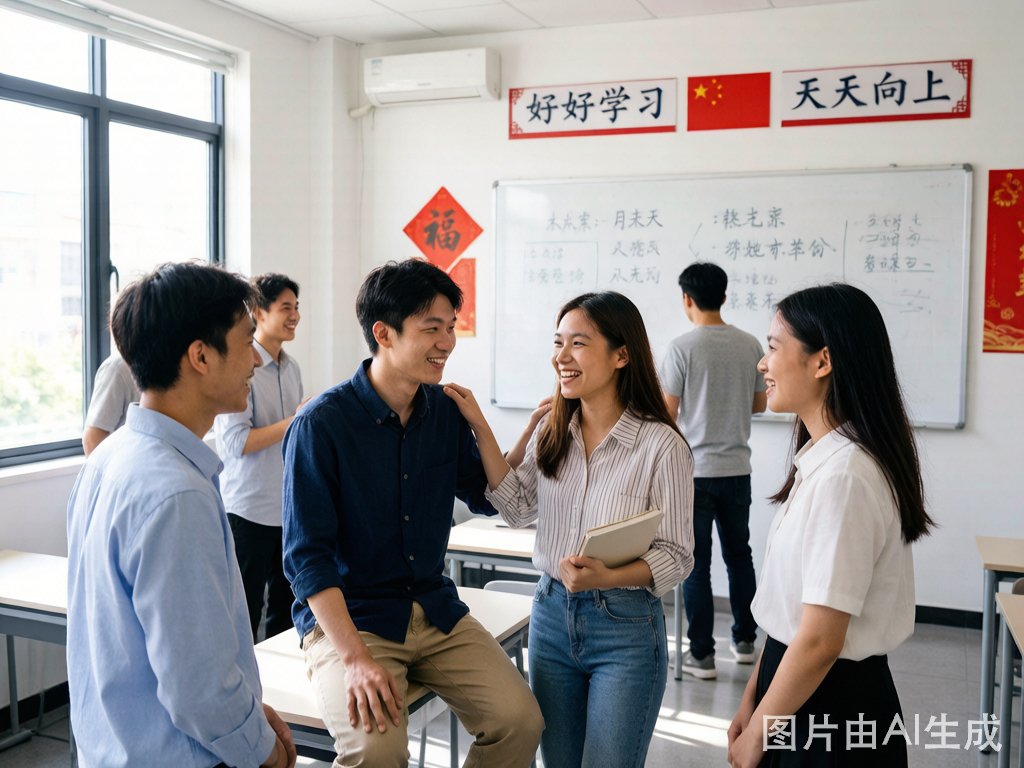
Top Chinese Language Programs Thai Students Should Look At
Not all Chinese language programs are built the same. Some are intensive full-time courses that get you fluent in a year. Others are more relaxed, with a couple of hours of class per day and plenty of time to explore. The key is picking one that fits your goals.
Beijing Language and Culture University, or BLCU, is pretty much the gold standard for Chinese language teaching. They have been doing this for decades, and their students come from every corner of the planet. For 2026, BLCU is running a “Chinese+” bachelor program in translation that comes with a scholarship from CLEC (Center for Language Education and Cooperation). The catch? You need HSK 4 with a score of at least 210 and HSKK Intermediate at 60 or above. The tuition runs about 20,000 RMB per year, which is roughly 100,000 Thai baht. The scholarship covers your dorm and gives you 2,500 RMB a month for living expenses.
If BLCU sounds a bit competitive, there are plenty of other options. Fudan University in Shanghai runs a solid Chinese language program through its ICES (International Cultural Exchange School). Classes start in both spring and fall, and the atmosphere in Shanghai is electric — you are learning Chinese while living in one of the most dynamic cities in the world. Tuition for a full year at Fudan’s language program is around 18,000 to 22,000 RMB depending on the intensity level.
Chongqing University, Jiangnan University in Wuxi, and Central South University in Changsha also offer well-structured Chinese language programs at more affordable rates. Tuition ranges from 10,000 to 16,000 RMB per year depending on the university. These schools are less famous internationally, which means smaller class sizes and more personal attention. Some Thai students actually prefer this because teachers have time to help with pronunciation — something Thai learners often struggle with, especially the four tones.
Tuition Fees and Living Costs: What You Are Really Paying
Let’s talk money. This is probably the first thing on your mind, so I will keep it straight.
For a standard Chinese language program (non-degree, one year), here is what you are looking at in 2026:
- Tuition: 10,000 – 22,000 RMB per year (roughly 50,000 – 110,000 Thai baht)
- Dormitory: 300 – 800 RMB per month (1,500 – 4,000 baht)
- Food: 800 – 1,500 RMB per month (4,000 – 7,500 baht) — way cheaper if you eat at student canteens
- Transport: 200 – 400 RMB per month (mostly metro and bus)
- Miscellaneous: 500 – 1,000 RMB per month (phone, toiletries, weekend outings)
So if you are paying out of pocket, a full year in China might cost you somewhere between 35,000 and 55,000 RMB. That is roughly 175,000 to 275,000 Thai baht. Compare that to studying Chinese in the US or UK where a similar program can easily run three to four times as much. China is genuinely affordable for Thai students.
But here is the thing — you probably do not need to pay all of that. There are scholarships that cover most of these costs. The Chinese Government Scholarship (CSC) is the biggest one. It covers full tuition, accommodation, comprehensive medical insurance, and a monthly stipend of 2,500 to 3,000 RMB for language students. The Confucius Institute Scholarship is another strong option, specifically designed for Chinese language learners. On top of these, there are provincial scholarships and individual university scholarships. Yunnan Province, for example, has specific scholarships for ASEAN students because of its close ties to Southeast Asia.
HSK Requirements and Application Timeline
Most Chinese language programs do not require you to know any Chinese before you start. That is the whole point of a language program. But if you want to apply for a scholarship or a degree-track program, you will need HSK scores.
For the CLEC scholarship at BLCU, you need HSK 4 with a minimum of 210 points and HSKK Intermediate with 60 points. For most university-specific scholarships, HSK 3 is enough to get you in the door, but HSK 4 will open more doors. The good news is that there are HSK test centers in Bangkok, Chiang Mai, Khon Kaen, and Phuket. You can take the test without traveling far.
The application timeline works roughly like this. For fall 2026 intake (September start), most applications opened in January or February and close between April and June. Some universities have rolling admissions and accept applications as late as August. For spring 2027 intake (March start), applications typically open in September 2026 and close in December 2026. If you are applying for a CSC scholarship, mark your calendar for early January — that is when the portal opens, and spots fill up fast.
Here is the step-by-step if you are planning to apply:
- Choose 3 to 5 universities and check their Chinese language program pages
- Prepare your documents: passport copy, high school diploma, transcripts, and a study plan
- If applying for scholarship, prepare HSK/HSKK certificates (or register for the test if you don’t have them yet)
- Submit online applications through the university portal or the CSC/Confucius Institute portal
- Wait for results (usually 4 to 8 weeks after the deadline)
- Apply for your X1 visa at the Chinese embassy in Bangkok with your JW201 or JW202 form
- Book your flight and pack your bags
Visa Process for Thai Students
Getting a student visa for China is actually pretty straightforward for Thai nationals. Once you get your admission letter and JW201 form (for scholarship students) or JW202 form (for self-funded students) from your university, you take those to the Chinese Visa Application Service Center in Bangkok on Rachadaphisek Road. The whole process usually takes about four working days.
You need to apply for an X1 visa, which is for long-term study (over 180 days). This visa lets you enter China, and then within 30 days of arrival, your university helps you convert it into a residence permit. The X1 visa fee for Thai passport holders is around 2,000 to 3,000 baht depending on processing speed. Make sure your passport is valid for at least six months beyond your intended stay in China.

Life in China as a Thai Student
Thai students tend to settle into life in China pretty quickly. The food is different, sure, but you will find rice at every meal if you want it. Major cities like Beijing, Shanghai, Guangzhou, and Kunming have Thai restaurants and grocery stores where you can buy familiar ingredients. If you get homesick, there are active Thai student associations at most large universities. These groups organize Songkran celebrations, Thai cooking nights, and group trips.
Kunming is especially popular among Thai students. It is only a two-hour flight from Bangkok, the climate is mild year-round (no freezing winters like in Beijing), and the city has a large Southeast Asian community. Yunnan University and Kunming University of Science and Technology both have strong Chinese language programs with many Thai students enrolled.
Guangzhou is another favorite. It has a huge Thai community, direct flights to Bangkok take about three hours, and the city is a major hub for trade between China and ASEAN. Many Thai students in Guangzhou end up finding part-time jobs or internships with Thai-Chinese trading companies while they study.
The biggest challenge most Thai students report is the tones. Thai is a tonal language too, but the tone system is different. Chinese has four tones plus a neutral tone, and getting them right takes practice. Thai students often struggle with the third tone (the dipping one) because it does not exist in Thai. The good news is that teachers in China are used to working with Thai students and have specific techniques to help. After three to six months of immersion, most students find their groove.
Frequently Asked Questions
Do I need to know any Chinese before applying to a language program?
Not at all. Most Chinese language programs accept complete beginners. They place you in a class based on your level, so if you are starting from zero, you will be with other beginners. If you have studied some Chinese before, they will give you a placement test on the first day.
Can I work part-time while studying Chinese in China?
Yes, but with some rules. As an X1 visa holder, you can apply for a part-time work permit through your university after you have your residence permit. You are allowed to work up to 20 hours per week during the semester and full-time during breaks. Many Thai students teach Thai language or work as translators for Chinese companies.
What is the best city in China for Thai students to learn Chinese?
It depends on what you want. Kunming is the closest to Thailand (cheap flights, warm weather, lots of Thai food). Beijing has the best universities but cold winters. Shanghai is expensive but offers the most international experience. If you want good value for money, Chongqing and Xi’an have low living costs and solid language programs.
How much money should I save before going to China?
If you have a full scholarship, you basically just need pocket money for travel and personal stuff — maybe 10,000 to 20,000 baht for the first month. If you are self-funded, having at least 100,000 baht saved up before you go will cover your first semester comfortably.
Can I switch from a language program to a degree program later?
Yes, many students do this. After a year or two of language study, you can apply for a bachelor’s or master’s program at the same university or a different one. Your language school certificate helps prove your Chinese proficiency, and some universities even waive the HSK requirement if you complete their highest-level language course.
Are there scholarships specifically for Thai students learning Chinese?
Absolutely. The ASEAN-China Young Leaders Scholarship, the Confucius Institute Scholarship, and various Yunnan provincial scholarships are all designed with Southeast Asian students in mind. Many of these do not require a university recommendation — you can apply directly online.
Is it safe for Thai students in China?
Generally, yes. China is one of the safest countries for international students. University campuses have 24-hour security, and cities are well-lit with cameras everywhere. Petty theft happens in crowded areas like any big city, but violent crime is extremely rare. Most Thai students I have talked to say they feel safer walking around at night in China than in Bangkok.
How long does it take to become fluent in Chinese?
If you study full-time (4-6 hours of class per day plus self-study), you can reach HSK 4 level in about one year. That is enough for daily conversation and basic work communication. Reaching HSK 5 or 6 usually takes two to three years of consistent study. The key is speaking every day — and in China, you have no choice but to speak Chinese, which is exactly what speeds things up.