
You’ve probably spent hours comparing QS rankings, trying to figure out which Chinese university is right for you. But here’s something most international students miss — China has its own official university tier system, and once you understand it, picking a school becomes a whole lot easier.
The Chinese government groups its universities into several tiers: C9 League (think China’s Ivy League), 985 universities, 211 universities, and the newer Double First-Class initiative. Each tier comes with different funding, teaching quality, and — crucially — different tuition fees for international students.
Let me walk you through what each tier actually means, give you real numbers on costs and rankings, and help you figure out which one fits your situation best.
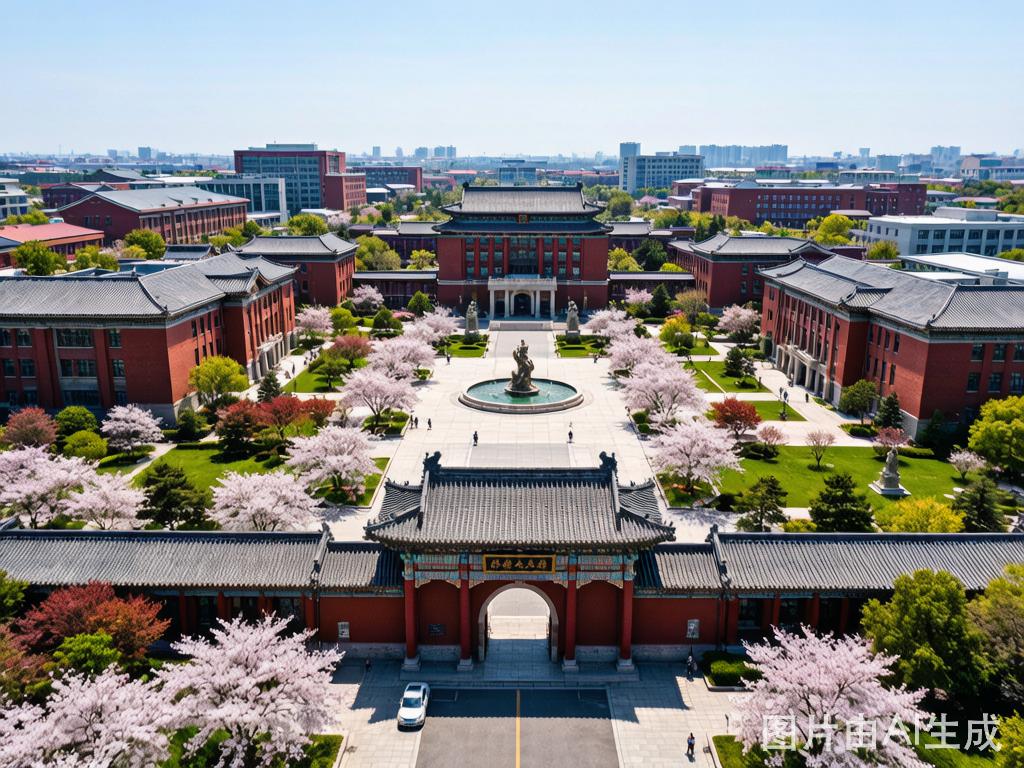
What Are C9, 985, 211, and Double First-Class?
These aren’t just random numbers. They’re official government classifications that determine how much funding a university gets, what international partnerships it can form, and — in many cases — how well your degree will be recognized back home.
211 Project (1995): Around 116 universities were picked to receive extra funding to become world-class. If a university has “211” status, it means the government invested serious money into its research and facilities.
985 Project (1998): An even more selective group of 39 universities from the 211 list. These are China’s top research universities, and they get the bulk of government funding. Think of 211 as “really good” and 985 as “top-tier.”
C9 League (2009): The elite of the elite — nine universities from the 985 group that form China’s answer to the Ivy League. These are Tsinghua, Peking, Fudan, Zhejiang, Shanghai Jiao Tong, Nanjing, USTC, Harbin Institute of Technology, and Xi’an Jiao Tong. If you get into a C9 school, you’re at the very top.
Double First-Class (2017, updated 2022): The newest classification, replacing the old 985/211 system. It’s divided into 42 “world-class” universities (basically the old 985) and hundreds of “first-class discipline” universities. In practice, people still use C9/985/211 because they’re more familiar.
C9 League: China’s Ivy League
The C9 League is where you’ll find the highest international rankings, the toughest admissions, and the highest tuition. But it’s also where your degree carries the most weight.
| University | QS 2026 | Annual Tuition (MBBS) | Annual Tuition (Engineering) | City |
|---|---|---|---|---|
| Tsinghua University | #25 | ~¥50,000 | ~¥30,000-40,000 | Beijing |
| Peking University | #27 | ~¥50,000 | ~¥30,000-40,000 | Beijing |
| Fudan University | #39 | ~¥45,000 | ~¥28,000-38,000 | Shanghai |
| Zhejiang University | #47 | ~¥42,000 | ~¥25,000-35,000 | Hangzhou |
| Shanghai Jiao Tong University | #45 | ~¥48,000 | ~¥28,000-38,000 | Shanghai |
| Nanjing University | #145 | ~¥40,000 | ~¥24,000-34,000 | Nanjing |
| USTC | #94 | ~¥38,000 | ~¥22,000-32,000 | Hefei |
| HIT | #252 | ~¥30,000 | ~¥20,000-30,000 | Harbin |
| Xi’an Jiao Tong University | #295 | ~¥30,000 | ~¥20,000-30,000 | Xi’an |
The C9 schools are expensive compared to other Chinese universities, but they’re still a bargain next to US or UK tuition. A year at Tsinghua costs roughly ¥50,000 for MBBS — that’s about $7,000 USD. Compare that to $50,000+ in the States, and you see why these schools are popular.
What you’re really paying for at C9 schools is three things: brand recognition (your employer will know the name), research output (if you’re aiming for academia), and alumni networks (C9 grads are everywhere in China’s top companies). If you have strong grades and the budget, C9 is the way to go.
985 Universities Beyond C9: The Hidden Gems
There are 30 non-C9 universities in the 985 group, and some of them offer better value for international students than the C9 — especially if you’re looking at specific programs.
Take Wuhan University, for example. It’s ranked around #194 in QS 2026 (roughly middle of the 985 pack), but its Chinese language program is fantastic, and tuition for non-medical programs runs about ¥20,000-30,000 per year. That’s roughly half of what you’d pay at Tsinghua.
Sun Yat-sen University in Guangzhou is another strong pick. QS rank around #267, but it’s one of the best places for business studies in southern China. Tuition for business programs runs about ¥22,000-35,000 per year, and living costs in Guangzhou are noticeably cheaper than Beijing or Shanghai.
Tongji University in Shanghai deserves a special mention. Its overall QS rank is around #216, but its civil engineering program is ranked #37 in the world. If you know what you want to study, a top-50 global department at a 985 university can be a smarter choice than a C9 school where your department is less famous.
Other 985 schools worth considering: Sichuan University (strong MBBS at ~¥30,000/year), Shandong University (great for Chinese language with affordable ¥18,000-25,000 tuition), and Jilin University (one of the cheapest 985 options with strong medical programs).
211 Universities: Great Value for Mid-Budget Students
There are about 116 universities in the 211 program, including the 39 985 schools. That means about 77 universities are “211 only” — still well-funded and respected, but without the top-tier prestige of C9/985.
For many international students, these 77 schools represent the sweet spot between quality and cost. A typical 211 university charges ¥15,000-25,000 per year for most programs — much more affordable than the ¥30,000-50,000 at C9 schools.
Beijing University of Technology (BJUT) offers engineering programs at about ¥18,000-22,000 per year. It’s located in Beijing, so you get the same city experience as Tsinghua students, but at less than half the tuition. Its engineering programs are well-regarded in China, and it’s a 211 school.
Shanghai University is another favorite among international students. Tuition runs about ¥16,000-22,000 per year. It has one of the best international student support systems in China, with dedicated advisors who help with visa renewals, housing, and cultural activities. The location is excellent — you’re in Shanghai but paying far less than Fudan or SJTU tuition.
Central University of Finance and Economics (CUFE) is a 211 school that punches above its weight in business and finance. Located in Beijing, it’s the top choice for many international students interested in China’s financial markets. Tuition runs about ¥18,000-28,000 per year.
Non-211 Universities: Affordable Options That Still Deliver
Let’s be honest — not everyone can afford C9 tuition, and not everyone has top-10% grades. That’s where non-211 universities come in. These schools may not have the same brand recognition, but many offer solid programs at a fraction of the cost.
Jiangsu University in Zhenjiang is famous for its MBBS program — ranked among the top for international MBBS students in China, with tuition around ¥20,000-25,000 per year. Its graduates consistently pass the MCI (Indian medical council) screening test at high rates.
Shenzhen University is an interesting case — it’s not a 211 school, but it’s located in one of China’s richest cities and gets massive local government funding. Its facilities are genuinely modern, and tuition for engineering programs is around ¥13,000-18,000 per year. The city of Shenzhen itself is a huge advantage if you’re interested in tech careers.
Guangxi Medical University offers MBBS at about ¥16,000-22,000 per year. For students from Southeast Asia and Africa on tighter budgets, this is one of the most practical options. The university has decades of experience teaching international students, and the cost of living in Nanning is one of the lowest among China’s major cities.
Which Tier Should You Choose?
Here’s a simple framework I give to students I advise:
If your budget is above ¥35,000/year and your grades are strong: Go C9. You’re buying brand recognition that will open doors globally. Even if your specific department isn’t top-ranked, the C9 name on your resume carries weight.
If your budget is ¥20,000-35,000/year and you know your major: Pick a 985 university where your target program is strong. Wuhan for language, Tongji for civil engineering, Sun Yat-sen for business. You get a top-tier education without the C9 price tag.
If your budget is ¥15,000-25,000/year: Go 211. Schools like Shanghai University and BJUT offer great education in top cities at reasonable prices. Your degree will be recognized, and you’ll have enough left over to actually enjoy your time in China.
If your budget is under ¥15,000/year: Look at non-211 schools with strong international programs. Jiangsu University for MBBS, Shenzhen University for engineering. You’ll miss out on the brand name, but the education quality can still be excellent — and you won’t graduate with a mountain of debt.
Frequently Asked Questions
Q: Does my employer know what 985 and 211 mean?
A: If you’re applying in China or Asia, yes — almost certainly. Chinese HR departments filter candidates by these tiers all the time. Western employers are less familiar with the system, but they do know names like Tsinghua and Peking. If you’re going back to your home country, a C9 or top 985 name will carry more weight than a 211 or non-211 school.
Q: Can I transfer from a 211 to a C9 university?
A: It’s uncommon in the Chinese system, but not impossible. Some universities accept transfer students, and really strong academic performance can help. A more realistic path is doing your bachelor’s at a 211 school and your master’s at a C9 — that’s a very common route for Chinese students themselves.
Q: What about the Double First-Class system — should I care about it?
A: Honestly, most people still use C9/985/211. The Double First-Class system is what the government uses for funding allocation, but employers and universities themselves rarely mention it. If a school was 985 before, it’s still treated as 985. Don’t overthink this one.
Q: Are C9 universities harder to get into?
A: Yes, significantly. For undergraduate programs, you’ll need strong high school grades, good SAT or equivalent scores, and proof of Chinese or English proficiency depending on the program. Some C9 schools also require entrance exams. Graduate programs are slightly more flexible — strong research experience and publications can offset lower grades.
Q: Is there a big difference in teaching quality between C9 and non-C9?
A: It varies by department, not just by university tier. I’ve seen great professors at 211 schools and mediocre ones at C9 schools. The main difference is resources — C9 schools have better labs, bigger libraries, and more international partnerships. But a motivated student at a 211 school can still get a world-class education if they pick the right program and actively seek opportunities.
Q: Which tier gives the best scholarship chances?
A: Actually, C9 universities are more generous with scholarships because they have more funding. Tsinghua and Peking offer full-ride scholarships (tuition + accommodation + living stipend) for top international students. But competition is fierce. At the 211 level, scholarship amounts are smaller but more frequently awarded — your chances of getting something are higher. The Chinese Scholarship Council (CSC) also allocates more slots to 985/211 schools, so whichever tier you target, apply early for government scholarships.
Q: I’m on a tight budget. Should I skip C9 and 985 entirely?
A: Not necessarily. Some C9 schools offer need-based financial aid, and scholarships like the Chinese Government Scholarship can cover everything. If your grades are excellent, apply to C9 schools AND for scholarships at the same time — you might be surprised. But if scholarship applications don’t work out, a 211 or non-211 school is still a solid choice. Your education in China is what you make of it, not just the name on your degree.