
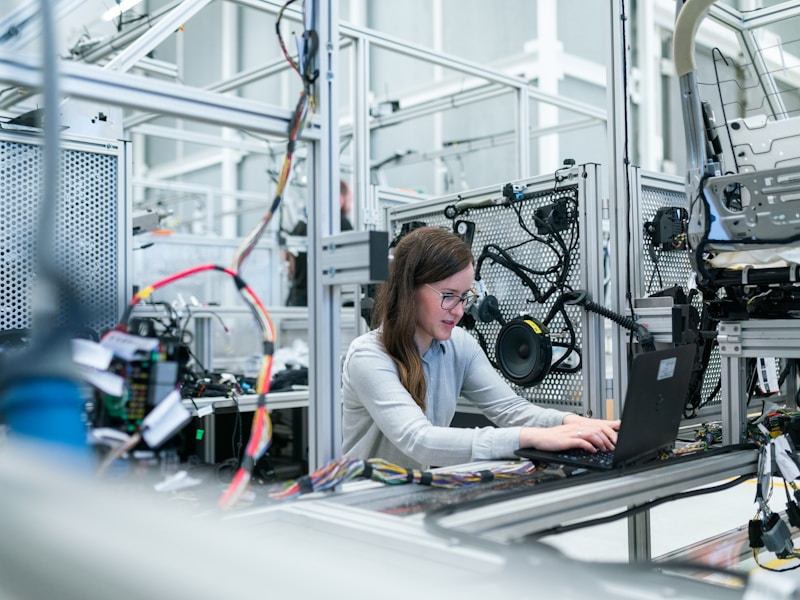
China’s engineering schools are producing some seriously talented graduates. Tsinghua alone cranks out more engineers than MIT, Stanford, and Berkeley combined every year. But here’s the thing — “best engineering university” depends entirely on what kind of engineer you want to be. Civil, mechanical, electrical, computer science, aerospace, biomedical — Chinese universities have different strengths for each discipline. This guide breaks it down major by major so you know exactly where to aim.
Civil Engineering — Tongji University Owns This One
Tongji University in Shanghai is ranked #8 globally for civil engineering (QS 2025), and for good reason. Their structural engineering lab is one of the best equipped in Asia, and they’ve worked on major projects like the Shanghai Tower and Hong Kong-Zhuhai-Macao Bridge. International students can apply for the English-taught Civil Engineering Bachelor’s program (≈¥38,000/year) or the master’s equivalent. Tsinghua and Zhejiang University also have strong civil programs, but Tongji is the clear choice if you want to specialize.
Tuition: ¥38,000–¥45,000/year. Scholarships: Chinese Government Scholarship (CSC) covers full tuition + accommodation + living stipend (¥3,000/month for bachelor’s, ¥3,500/month for master’s).
Mechanical Engineering — Tsinghua and HUST Lead the Pack
Tsinghua’s School of Mechanical Engineering is ranked #12 globally (QS 2025). They have 14 national key labs and partnerships with Siemens, Bosch, and Volkswagen — so internships are built into the curriculum. If you want hands-on manufacturing experience, Huazhong University of Science and Technology (HUST) in Wuhan is seriously underrated. HUST runs one of China’s biggest mechanical simulation centers, and their tuition is significantly cheaper at ¥32,000/year compared to Tsinghua’s ¥40,000/year.
Both universities offer English-taught master’s programs. For bachelor’s, you’ll need HSK 4 or take a preparatory Chinese year.
Electrical & Electronic Engineering — SJTU and SEU Are Dark Horses
Shanghai Jiao Tong University (SJTU) ranks #16 globally for EE (QS 2025), with a focus on power systems and telecommunications. Southeast University (SEU) in Nanjing is China’s hidden gem for electronics — they lead the national research on 6G and chip design. If you’re into hardware, SEU costs about ¥30,000/year and is far less competitive to get into than SJTU or Tsinghua.
Xian Jiaotong University (XJTU) is also top-tier for electrical engineering, especially power generation and high-voltage tech. Their EE program is one of the cheapest among top schools at around ¥28,000/year.
Computer Science & Software Engineering — The Big Four
If you’re looking at CS or software engineering, the top tier in China is clear: Tsinghua (#15 globally), Peking University (#20), Zhejiang University (#25), and Shanghai Jiao Tong University (#32) — QS 2025 rankings. Tuition ranges from ¥30,000/year (ZJU) to ¥40,000/year (Tsinghua). All four offer full English-taught programs at the graduate level. For bachelor’s CS in English, SJTU and ZJU are your best bets.
One thing to know: Chinese CS programs are heavy on math and theory. You’ll take algorithms, discrete math, and operating systems in the first two years before touching applied stuff. That’s not a bug — it’s by design, and it means Chinese CS grads are solid problem solvers.
Chemical Engineering — Tianjin University Is the Specialist
Tianjin University has the strongest chemical engineering program in China (QS #28 globally). Their Chemical Engineering and Technology bachelor’s is taught in English and costs about ¥32,000/year. Zhejiang University and Tsinghua also have strong chem eng departments, but TJU is the specialist — if you know you want chemical engineering, go here. They have partnerships with BASF, Dow, and Sinopec for industry placements.
Aerospace Engineering — Beihang (BUAA) Is the One
Beihang University (formerly Beijing University of Aeronautics and Astronautics) is China’s aerospace powerhouse. They designed the Beihang-1 satellite and work directly with the China Aerospace Science and Technology Corporation (CASC). Their Aerospace Engineering bachelor’s (English-taught) costs ¥35,000/year. Northwestern Polytechnical University (NPU) in Xian is the second choice — more focused on defense and propulsion, slightly cheaper at ¥30,000/year.
Heads up: aerospace programs may have restrictions for international students, especially for master’s and PhD levels. Always email the international office before applying.
Biomedical Engineering — PKU and SJTU Are Building the Future
Peking University’s College of Engineering and SJTU’s School of Biomedical Engineering are both world-class. PKU focuses on medical imaging and neural engineering (¥37,000/year), while SJTU leans into biomechanics and rehabilitation robotics (¥38,000/year). Southeast University’s BME program is a budget-friendly option at ¥28,000/year with strong research in tissue engineering.
Tuition Comparison Table — Best Engineering Schools in China 2026
| University | Best For | Annual Tuition (¥) | QS Rank (Engineering) |
|---|---|---|---|
| Tsinghua University | Mechanical, CS, Chem Eng | 40,000 | #12 |
| Shanghai Jiao Tong University | EE, CS, Biomedical | 38,000 | #16 (EE) |
| Tongji University | Civil Engineering | 38,000–45,000 | #8 (Civil) |
| Zhejiang University | CS, Chem Eng, Civil | 30,000 | #25 (CS) |
| Beihang University | Aerospace | 35,000 | Top in China (Aero) |
| Huazhong UST | Mechanical Eng | 32,000 | #45 (Mech) |
| Tianjin University | Chemical Eng | 32,000 | #28 (Chem) |
| Southeast University | EE, Biomedical, Electronics | 28,000–30,000 | Top 50 (EE) |
Which English-Taught Engineering Programs Are Available?
More Chinese universities are offering full English-taught engineering programs every year. As of 2026, here’s what’s available for bachelor’s level: SJTU has the longest-running English engineering bachelor’s (Mechanical and CS tracks). Zhejiang University offers Civil and CS in English. Tongji has Civil Engineering in English. Tianjin University offers Chemical Engineering in English. Beihang has Aerospace Engineering in English.
At the master’s level, most C9 universities (Tsinghua, PKU, Fudan, SJTU, ZJU, NJU, USTC, HIT, XJTU) offer English-taught engineering programs. The catch? Master’s programs are more research-focused — you’ll need to find a supervisor before you apply.
How to Apply as an Engineering Student
The application process is pretty standard for most Chinese universities. Here’s the short version: Apply through the university’s international student portal between January and April (most deadlines fall in March). Prepare your transcript, two recommendation letters (from STEM professors), a study plan (500–800 words explaining why you want to study engineering in China), passport copy, and HSK certificate if applying to Chinese-taught programs. For English-taught programs, submit TOEFL (80+) or IELTS (6.0+) scores.
Most universities charge an application fee of ¥400–¥800 — non-refundable, so pick your top choices carefully.
FAQs
Can I study engineering in China without knowing Chinese?
Yes. Over 30 Chinese universities offer full English-taught engineering programs at bachelor’s and master’s levels. SJTU, ZJU, Tongji, and Tianjin University have the most options. That said, learning basic Chinese (HSK 3–4) will make your daily life and internship hunting way easier.
Which engineering major has the best job prospects in China?
Computer Science and Software Engineering have the strongest job market right now. Fresh CS grads from top Chinese universities can land jobs at Alibaba, Tencent, or Huawei starting at ¥200,000–¥350,000/year. Electrical engineering is also strong, especially in the semiconductor industry where China is investing heavily.
Are Chinese engineering degrees recognized internationally?
Yes. Tsinghua, PKU, SJTU, ZJU, and Tongji are all recognized by the Washington Accord — meaning their engineering degrees are treated as equivalent to degrees from the US, UK, Australia, and Canada. Most Chinese C9 universities have ABET accreditation for their engineering programs or equivalent international recognition.
Is Tongji really the best for civil engineering?
By the numbers, yes. Tongji is ranked #8 globally for civil engineering (QS 2025) — that’s above Imperial College London and UC Berkeley. Their Structural Engineering Key Lab is a national-level facility, and most of China’s landmark bridges and tunnels involve Tongji alumni.
What’s the living cost for engineering students in China?
Budget about ¥2,000–¥4,000/month depending on the city. Beijing and Shanghai are the most expensive (rent alone: ¥2,000–¥3,500/month for a decent spot near campus). Nanjing, Wuhan, and Tianjin are noticeably cheaper (rent: ¥1,000–¥2,000/month). On-campus dormitories for international students cost ¥500–¥1,500/month and are the most convenient option.
Can I get a scholarship for engineering programs?
Absolutely. The Chinese Government Scholarship (CSC) covers full tuition, accommodation, and living costs for engineering students. Provincial scholarships (like Shanghai Government Scholarship) cover partial tuition. University-specific scholarships are also common — Tsinghua’s Siemens Scholarship, for example, covers ¥20,000/year for mechanical engineering students with good grades.
Which is cheaper — Beijing or Shanghai for engineering?
Slightly cheaper in Beijing overall. Rent and food are comparable, but Shanghai has higher transportation costs and generally pricier international student services. University-specific: Shanghai universities (SJTU, Tongji) charge ¥38,000–¥45,000/year, while Beijing (Tsinghua, Beihang) charges ¥35,000–¥40,000/year. So Beijing wins by a small margin.
Do Chinese engineering programs have internships?
Most 4-year bachelor’s programs include a mandatory internship (usually in year 3 or summer between year 3 and 4). Top universities have partnerships with companies like Huawei, BYD, CATL, and Tencent. International students are eligible for these internships, though some defense-related companies may have restrictions.