
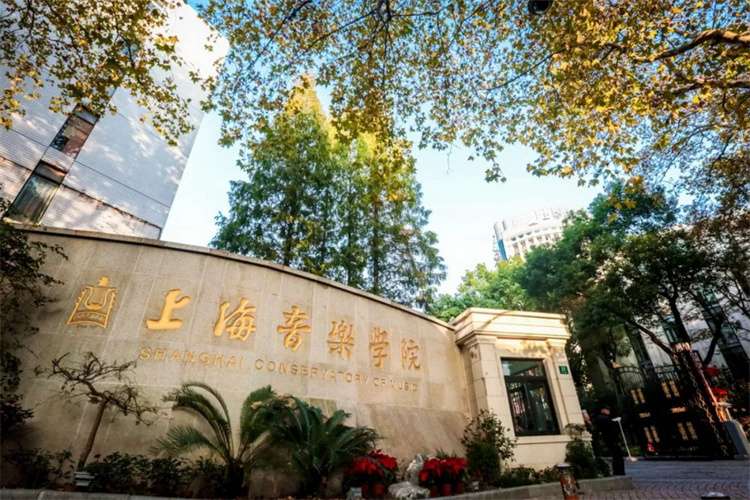
2025 Shanghai Conservatory of Music Admission Brochure of Undergraduate Programs for International Students
I. Majors / Fields of Study and Duration of the Programs
Musicology
˗ Musicology (Five years)
˗ Musical Instrument Fabrication and Repair (Four years)
Music Education
˗ Music Education (Four years)
Composition Techniques and Theory
˗ Composition (Five years)
˗ Chinese Music Composition (Five years)
˗ Solfeggio (Four years)
Music Performance
˗ Conducting (Five years)
˗ Opera Coaching (Five years)
˗ Vocal Performance (Five years; including Bel Canto and Chinese singing)
˗ Piano Performance (Four years)
˗ Modern Instrumental Performance (Four years; including jazz piano, jazz saxophone, jazz guitar, jazz trumpet, jazz trombone, jazz bass, pipe organ, electronic organ, accordion, and classical guitar)
˗ Percussion Performance (Four years; including Western percussion, Chinese percussion, and pop percussion)
˗ Orchestral Instruments Performance (Four years; including violin, viola, cello, double bass, harp, clarinet, oboe, bassoon, flute, saxophone, trumpet, horn, trombone, bass trombone, and tuba)
˗ Traditional Chinese Instruments Performance (Four years; including Chinese flute, sheng, suona, yangqin, liuqin, zhongruan, pipa, zheng, guqin, erhu, banhu, cello and double bass)
Musical Theatre
˗ Musical Theatre Performance (Four years)
Recording Arts
˗ Recording Arts (Four years)
˗ Music Design and Production (Four years)
Digital Media Arts
˗ Multimedia Art Design (Four years)
˗ Transmedia Music (Four years)
* Note: Dual application is not allowed, that is, each applicant can only apply to one of the above programs.
II. Applicant Eligibility
Applicants must meet all of the following eligibility criteria:
i. Be between the age of 18 and 40 and in good mental and physical health. ii. Have a certificate equivalent to a high school diploma or a higher degree.
- Be a non-Chinese citizen with a valid foreign passport and meet the requirements of the Ministry of Education of the P.R. China on international students.
A person who has gained foreign nationality after immigration from Chinese Mainland, the Hong Kong and Macau SARs, and Taiwan Province, or a person who has acquired foreign nationality at birth because one or both of his/her parents are Chinese nationals that have settled abroad, can be deemed as a non-Chinese citizen.
However, for such persons to be eligible for SHCM Undergraduate Programs as international students, the applicant must hold a valid passport or nationality certificate of his/her country of nationality for at least four years, and have a record proving that he/she has lived in that country for more than two years (nine or more months of residence in that country in a calendar year can be counted as one year, as subject to the entry and exit dates stamped on the passport) within the past four years (as of April 30, 2025).
- Have good moral character and no criminal record; and be willing to abide by Chinese laws and regulations, as well as the rules of the SHCM.
- Have certain learning ability and professional music competency.
- Language Requirements: New HSK Level 4 Certificate (180 points or above).
- Have sufficient financial resources to cover the tuition and fees, as well as living expenses, medical expenditures and international travel costs during your study in China.
III. Application Guide
We only accept online applications for 2025 enrollment.
SHCM Undergraduate Application System: https://zsbm.shcmusic.edu.cn/wjdk
Application and application fee payment period: from 08:00 a.m. on Friday, May 9, 2025 to 12:00 noon on Friday, May 23, 2025 (GMT+08:00). Late applications will not be accepted.
- Application Fee Payment
Application Fee: RMB 500 yuan.
The application fee should be remitted to the following bank account before the deadline.
It is non-refundable whether you take the exam or not. Cash payment will not be accepted.
Account Details:
Beneficiary Name: Shanghai Conservatory of Music
Bank Account No.: 453362703070
Beneficiary Bank: Bank of China, Shanghai Huaihai Branch Swift Code: BKCHCNBJ300
* Note: Please mark the applicant’s name and “Application fee for 2025 International Students Undergraduate Programs” when making the payment.
Make sure to properly keep the payment voucher, as it is required for application submission.
- Application Materials Submission
Eligible applicants should fill out the application form and upload the colored scanned copy or electronic version of all the required documents through the SHCM
Undergraduate Application System (https://zsbm.shcmusic.edu.cn/wjdk)
★ Application Materials List
- A recently-taken colored passport-size photo (full face, front view, bare head) in JPG format within 200 kb. Ensure it is clear and undamaged.
- Evidence of Foreign Citizenship:
- A scanned copy of the photo page of the applicant’s valid passport with at least 6 months of remaining validity.
- A scanned copy of all passport pages with entry/exit of China stamps between April 30, 2021 and April 30, 2025 (if applicable).
- For an applicant who has acquired foreign nationality at birth because one or both of his/her parents are Chinese nationals who have settled abroad, he/she must hold a valid passport or nationality certificate of his/her country of nationality for at least four years and need to provide evidence that he/she has lived in that country for more than two years within the past four years (as of April 30, 2025). The applicant must also provide his/her birth certificate and both parents’ proof of nationality or identity certificate (passport or ID card), as well as the applicant’s entry/exit record.
- For an applicant who has gained foreign nationality after immigration from China, he/she must hold a valid passport or nationality certificate of his/her country of nationality for at least four years and need to provide evidence that he/she has lived in that country for more than two years within the past four years (as of April 30, 2025). The applicant must also provide proof of cancellation of Chinese household registration, and renunciation of Chinese nationality, as well as the applicant’s entry/exit record.
- 2025 Shanghai Conservatory of Music Undergraduate Programs Application Form for International Students (Please upload both the completed digital version in Microsoft Office Word format and a scanned copy of your signed version).
- A scanned notarized copy of your highest degree certificate or diploma (schooling certificate or intended graduation certificate for upcoming graduates). A Chinese or English translation is required for certificates in other languages than Chinese and English.
- A scanned notarized copy of the original transcripts of all courses the applicant has taken during his/her high school years. A Chinese or English translation is required for transcripts in other languages than Chinese and English.
- A scanned copy of the original Chinese Proficiency Test (HSK) certificate obtained within the past two years.
- Statement of Financial Support (See the attachment).
- A scanned copy of the Certificate of Non-criminal Record. If you are currently living in China and unable to provide this document, you may contact the SHCM Undergraduate Admissions Office at zb@shcmusic.edu.cn or the SHCM International Education Division at iso@shcmusic.edu.cn for advice.
- A scanned copy of the Physical Examination Record for Foreigners (See the attachment; the Physical Examination Record should be issued within the past three months).
- Application Fee Payment Voucher.
- A signed Letter of Commitment (See the attachment for the template).
* Special Notes:
The scanned copies of the application documents should be clear and complete. Please properly keep the original copies. If you get admitted, the SHCM International Education Division will collect and verify your original documents upon your arrival at our Conservatory at the beginning of the new academic year.
Applicants must provide all the required information truthfully and correctly. Failure to provide the application information as required, false or incorrect information provided, and failure to pay the application fee or to submit the required application and exam documents within the specified deadline may lead to the applicant’s being excluded from the evaluation or cause adverse impact on the admission procedure. In such case, the applicant concerned shall be responsible for all undesirable consequences.
Application materials submitted and application fees paid will not be returned or refunded, regardless of whether an applicant takes the exams or whether he/she is admitted to the SHCM.

IV. Major-oriented Examination
Applicants are required to submit exam materials, including academic papers and videos, for review. Please see below for more details on the exam requirements for different majors.
Exam materials should be sent by email to 227528086@qq.com
Exam materials submission period: from 08:00 a.m. on Friday, May 9, 2025 to 12:00 noon on Friday, May 23, 2025 (GMT+08:00). Late submission will not be accepted.
Please write the email subject line in the following format: Exam Materials+Applicant’s Nationality+Applicant’s Name+Field of Study.
V. Admission
The list of admitted applicants will be posted on the websites of the SHCM Undergraduate Admissions Office (https://jwc.shcmusic.edu.cn/) and the International Education Division (https://www.shcmusic.edu.cn/1659/list.htm). The electronic Admission Letter will be sent via email to successful candidates in July 2025, with the physical version to be issued after their arrival at the SHCM in the upcoming semester. Please observe the visa and registration requirements provided in the Admission Letter.
VI. Visa
The visa policy for entering China in 2025 shall be subject to the official notice of the Ministry of Foreign Affairs and the National Immigration Administration of China. Please avoid early arrival before the date specified in further notice.
VII. Health and Eligibility Verification
According to the regulations of the Ministry of Education of China, health and eligibility verification will be conducted after international students arrive at the SHCM. If an international student is diagnosed with a disease that makes it unsuitable for them to stay or study in China, or if they are found to have engaged in cheating or fraud, such as not meeting program eligibility requirements or incomplete admission procedures, they will face punishment pursuant to relevant laws and regulations.
VIII.Fees and Scholarship Policy
The tuition (excluding book & miscellaneous fees) is RMB 32,000 per academic year.
Accommodation fee: RMB 40/person/day, double room.
Based on relevant official documents of the Chinese government and the Shanghai municipal government, Shanghai government scholarships will be awarded according to the SHCM Rules for the Application for and Review of Shanghai Government Scholarship for
International Students and SHCM Detailed Rules on the Review of Shanghai Government Scholarships. (For more information, please visit the website:
IX. Insurance
As per the regulations of the Ministry of Education of China, international students are obligated to participate in the “Comprehensive Insurance & Protection Scheme for Foreigners Staying in China” with an insurance premium of RMB 800/person/year. International students may choose to purchase the insurance when they register at the SHCM International Education Division or before they arrive in China.
X. Contact Information
International Education Division of Shanghai Conservatory of Music
Website: https://www.shcmusic.edu.cn/1659/list.htm
Enquiry service: iso@shcmusic.edu.cn
Undergraduate Admissions Office of Shanghai Conservatory of Music
Website: https://jwc.shcmusic.edu.cn/
Enquiry service: zb@shcmusic.edu.cn
Address: No. 20 Fenyang Road, Shanghai 200031, China
Zip Code: 200031
Specific Exam Requirements for Different Majors
1. Musicology
Application Requirements: 1) have experience in theoretical research and music practice; 2) demonstrate mastery of basic musicology knowledge with good theoretical thinking and excellent writing skills; 3) possess certain level of instrumental or vocal music performance ability.
▲ Exam Content
- Professional Test
- Submit a paper of no less than 3,000 Chinese characters on a topic related to
Chinese music history or traditional Chinese music; ii. Music talent show (instrumental or vocal performance): Submit a video that contains your instrumental and/or vocal performance of two complete pieces. You need to perform from memory and without accompaniment. The total length of performance should not exceed 10 minutes.
- Q&A (Please answer in Chinese)
- Give a three-minute self-introduction.
- Share the reasons why you choose Shanghai Conservatory of Music and your understanding of Chinese culture.
- Talk about your understanding of your chosen major and your plans and goals for future study.
【Video Recording Requirements】
- Vocal Performance
- Record vertically to generate a front-view video with the performer’s full body visible.
- The camera should be fixed at a proper position during the whole course.
- Please report the title of each song before singing it.
- Slight and proper body movement to enhance expressiveness is allowed.
- A quiet, indoor space with clean background is required for the recording. Remember to avoid counter-light shooting.
- Formal, elegant dressing is a basic requirement. Costume and light makeup are both allowed.
- Only the applicant is allowed to appear in the video, and you should remain within the filming range throughout the recording.
- The video should be recorded continuously from a fixed angle in one single take. Post-editing or modification to the image or sound is prohibited.
- Instrumental Performance
- Record vertically to generate a front-view video with the performer’s full body visible.
- The applicant’s whole body and the entire musical instrument must be visible. Ensure the performer’s face and the movements of his/her arms and fingers can be seen clearly throughout the performance.
- The video recording device should be fixed at an appropriate distance from the performer to ensure his/her head, arms, hands and feet are visible.
- The video should be recorded continuously from a fixed angle in one single take. Post-editing or modification to the image or sound is prohibited.
- Only the applicant is allowed to appear in the video, and you should remain within the filming range throughout the recording.
▲ Recommended Reading List – Chinese Music History
Book Title Author Publisher and Year
| A Concise History of Ancient Chinese Music | Xia Ye | Shanghai Music Publishing House, 2004 | |
| A Brief History of Chinese Music Culture | Dai Wei | Shanghai Ancient Books Press & Zhonghua Book Company, 2010 | |
| A Concise Tutorial on Ancient Chinese Music History | Zhao Weiping | Shanghai Music Publishing House, 2015 | |
| History of Modern and Contemporary Chinese Music (Third Revision) | Wang Yuhe | People’s Music Publishing House, 2002 | |
| Chen Yingshi & A Brief History of Chinese Music Chen Lingqun | Higher Education Press, 2006 | ||
| ▲ Recommended Reading List – Traditional Chinese Music Book Title Author | Publisher and Year | ||
| Huang Yunzhen, Wang A Guide to Traditional Chinese Music Can, Guo Shuhui | Shanghai Conservatory of Music Press, 2006 | ||
| Guo Shuhui (lead author), Traditional Chinese Music Liu Hong, Zhang Xuan, Jiang Shan (co-authors) | Shanghai Conservatory of Music Press, 2019 | ||
| An Introduction to Chinese Folk Music Jiang Mingdun | Shanghai Music Publishing House, 2016 | ||
| An Introduction to Traditional Chinese Yuan Jingfang Music | People’s Music Publishing House, 2000 | ||
| Sounding China: A Companion to Guo Shuhui (author); Chinese Traditional Music Translated by Li Mingyue | Shanghai Music Publishing House, 2019 | ||
2. Musical Instrument Fabrication and Repair
Application Requirements: 1) be proficient in playing an instrument from the violin family; 2) be skilled in woodworking, i.e., good command of sawing, planing, cutting, and filing techniques; 3) have a good aesthetic sense of violin music.
▲ Exam Content
- Professional Test
- Instrumental Performance
Play an etude and a music work of your choice on violin, viola, or cello without accompaniment. You don’t need to perform from memory.
- Hands-on Test (Time limit: 90 minutes)
- Purpose: This test aims to evaluate your handwork ability by examining your use of woodworking tools such as saws and planers.
- Materials and Tools: You will need to prepare the following items: 1) a crude maple slab with a width of 3.5 cm, a thickness of a least 2 cm, and a length of at least 40 cm; 2) a workbench; 3) a European-style planer or a traditional wood planer; 4) woodworking saw; 5) thickness measuring tools; 6) F-clamps; and 7) a marble board (optional) for final processing of thin wood sheets.
- Test Requirements: Plane flat a 3.5cm wide surface on the radial section of the wood, saw out a wood sheet, and then further plane the wood sheet to flatten it and reduce its thickness, during which you can measure the thickness of the sheet. Repeat the last two steps to produce a 1-mm thick rib piece with even and smooth finish on both sides and uniform thickness.
- Q&A (Please answer in Chinese)
- Give a three-minute self-introduction.
- Share the reasons why you choose Shanghai Conservatory of Music and your understanding of Chinese culture.
- Talk about your understanding of your chosen major and your plans and goals for future study.
【Video Recording Requirements】
- Instrumental Performance
- The performance must be done by the candidates themselves.
- Record vertically to ensure the performers’ full body, especially their hand and arm movements, are clearly visible.
- The musical instrument and the performer should remain within the filming range throughout the recording.
- Choose an appropriate space that avoids echo for the recording to ensure the clarity of the sound effect.
- The etude and your chosen music piece should be performed continuously and recorded in one video. Post-editing or any modification to the sound effect is not allowed.
- The total length of performance should not exceed 10 minutes.
- Hands-on Test
- The test must be done by the candidates themselves.
- Record vertically to ensure the candidates’ full body is clearly visible.
- All materials and tools needed for the test should be prepared in advance and placed on the workbench before the recording starts. The candidate, the wood, and the tools should remain within the camera’s range throughout the recording.
- The entire operation process must be recorded continuously in one take. Postediting is not allowed.
- Once you’ve finished the wood processing, please display the wood sheet you produced close to the camera and measure its thickness at multiple spots. Ensure the measurement is clearly visible in the video.
- The test time (video length) should not exceed 90 minutes.
3. Music Education
Application Requirements: 1) have practical music performance experience with accurate intonation and rhythm, and a strong memory for music; 2) have basic knowledge of music and music theory, and demonstrate satisfactory musical competence; 3) master the fundamentals and techniques of piano and vocal performance with the ability to apply these skills in practice; 4) be able to learn in Chinese.
▲ Exam Content
- Professional Test
- Piano Performance: Perform from memory two music works of different styles.
- Vocal Performance: Sing from memory two music works of different styles.
- Q&A (Please answer in Chinese)
- Give a three-minute self-introduction.
- Share the reasons why you choose Shanghai Conservatory of Music and your understanding of Chinese culture.
- Talk about your understanding of your chosen major and your plans and goals for future study.
【Video Recording Requirements】
- Professional Test
- Piano performance should be recorded from one side of the piano using a single fixed camera placed at an adequate distance, with the performer’s hands and face clearly visible.
- As to vocal performance, it should ensure that the performer is clearly visible in the video.
- Q&A
- Only the applicant is allowed to appear in the video, and he/she should remain within the filming range throughout the recording.
- Don’t move the camera or change the camera angle throughout the shooting.
- Record continuously in one take without any post-editing.
4. Composition
Application Requirements: 1) have practical experience in music composition; 2) have a solid foundation in music theory and basic knowledge of harmonics; 3)have a certain level of sightsinging and aural skills; 4) be proficient at playing the piano or any other musical instrument.
▲ Exam Content
- Professional Test
- Music Composition: Submit two or three original compositions by the candidates. There are no limitations on the genre or style.
- Instrumental Performance: Play one etude and one music piece of your choice on piano or any other musical instrument. The total length of performance should not exceed 10 minutes.
- Vocal Performance: Sing a vocal piece of your choice without accompaniment. The vocal performance should not exceed 5 minutes.
- Sight-singing: Sight sing a music piece of your choice without accompaniment.
The piece should contain two sharps/flats. There is no need to sing from memory. This part is limited to 3 minutes. Please also submit the PDF file of the music score.
- Q&A (Please answer in Chinese)
- Give a three-minute self-introduction.
- Share the reasons why you choose Shanghai Conservatory of Music and your understanding of Chinese culture.
- Talk about your understanding of your chosen major and your plans and goals for future study.
【Video Recording Requirements】
- Wear formal dress for the recording.
- For instrumental performance, please refer to the video recording requirements for Piano Performance, Orchestral Instrument Performance, Traditional Chinese Instrument Performance, Modern Instrumental Performance, or Percussion Performance, depending on the instrument you play.
- For vocal performance and sight-singing, please refer to the video recording requirements for Vocal Performance.
- Chinese Music Composition
Application Requirements: 1) have practical experience in music composition; 2) have a solid foundation in music theory and basic knowledge of harmonics;3)have a certain level of sightsinging and aural skills; 4) be proficient at playing the piano or any other musical instrument.
▲ Exam Content
- Professional Test
- Music Composition
Submit one original Chinese instrumental music composition in standard music notation, with no limitations on the style.
- Instrumental Performance
- Perform from memory one piano piece of no more than 6 minutes.
- Optional – Traditional Chinese Instrument Performance: Play a short music passage of no more than 2 minutes using a traditional Chinese instrument.
* Note: The total length of instrumental performance should not exceed 8 minutes.
- Vocal Performance: Sing a vocal piece of your choice without accompaniment. The vocal performance should not exceed 5 minutes.
- Sight-singing: Sight sing a music piece of your choice without accompaniment.
The piece should contain two sharps/flats. There is no need to sing from memory. This part is limited to 3 minutes. Please also submit the PDF file of the music score.
- Q&A (Please answer in Chinese)
- Give a three-minute self-introduction.
- Share the reasons why you choose Shanghai Conservatory of Music and your understanding of Chinese culture.
- Talk about your understanding of your chosen major and your plans and goals for future study.
【Video Recording Requirements】
- Wear formal dress for the recording.
- For instrumental performance, please refer to the video recording requirements for Piano Performance, Orchestral Instrument Performance, Traditional Chinese Instrument Performance, Modern Instrumental Performance, or Percussion Performance, depending on the instrument you play.
- For vocal performance and sight-singing, please refer to the video recording requirements for Vocal Performance.
- Solfeggio
Application Requirements: have excellent sight-singing and aural skills; 2) be able to notate complex single and multi-part melodies, as well as chord progression without modulation; 3) be proficient in playing and sight singing music scores with considerable difficulty; 4) have basic knowledge of harmonics and composition techniques, with competency in piano performance to the required degree.
▲ Exam Content
- Professional Test
- Music Composition: Submit one or two original compositions by the candidates. There are no limitations on the instruments and style used.
- Instrumental Performance: Play in order one etude, one polyphonic composition and one music piece of your choice on piano or any other musical instrument. The total length of performance should not exceed 30 minutes.
- Vocal Performance: Sing an art song of no more than 5 minutes without accompaniment.
- Piano Playing & Sight-singing: Play and sight sing a music piece of your choice. The piece should be in a 4/4 or 6/8 time signature and contain three sharps/flats, upbeats, complex rhythm, and various altered notes. This part is limited to 5 minutes. Please also submit the PDF file of the music score.
- Q&A (Please answer in Chinese)
- Give a three-minute self-introduction.
- Share the reasons why you choose Shanghai Conservatory of Music and your understanding of Chinese culture.
- Talk about your understanding of your chosen major and your plans and goals for future study.
【Video Recording Requirements】
- Wear formal dress for the recording.
- For instrumental performance, please refer to the video recording requirements for Piano Performance, Orchestral Instrument Performance, Traditional Chinese Instrument Performance, Modern Instrumental Performance, or Percussion Performance, depending on the instrument you play.
- For art song singing, please refer to the video recording requirements for Vocal Performance.
- For piano playing & sight-singing, please refer to the video recording requirements for Piano Performance.
7. Conducting
Application Requirements: able to conduct the performance of classical Chinese and foreign music works; 2) possess strong abilities to identify chords by ear and dictate melody; 3) have a firm grasp of music theory and be able to sight sing and read music scores of certain difficulty; 4) have basic knowledge of harmonics; 5) demonstrate proficiency in piano performance and vocal singing to the required degree.
▲ Exam Content
- Professional Test
- Vocal Performance
Sing from memory an art song or an opera excerpt in its original language, unaccompanied, for no more than 5 minutes.
- Piano Performance
- Play one etude, one polyphonic composition and one music piece of your choice on piano.
- Optional – You may also play additional pieces with other musical instruments.
* Note:
- Perform from memory.
- The total length of performance should not exceed 30 minutes.
- The order of performance should be as follows: etude, polyphonic composition, your chosen music piece, and any additional pieces (if applicable).
- Conducting
- Conduct a choral work of your choice.
- Conduct an orchestral work of your choice (including both Western or Chinese orchestral music works).
* Note:
- The candidates are required to perform the conducting test from memory and the total length of this part should not exceed 20 minutes.
- The candidate should prepare the accompaniment tracks for their conducting test.
- The accompaniment tracks should be full chorus version and full orchestra version respectively.
- Comprehensive Ability Test
Sight-singing: Sight sing a piece of music of your choice without accompaniment. The piece should be in a 4/4 or 6/8 time signature and contain three sharps/flats, upbeats, complex rhythm, and various altered notes. There is no need to sing from memory. This part is limited to 3 minutes. Please also submit the PDF file of the music score.
- Q&A (Please answer in Chinese)
- Give a three-minute self-introduction.
- Share the reasons why you choose Shanghai Conservatory of Music and your understanding of Chinese culture.
- Talk about your understanding of your chosen major and your plans and goals for future study.
【Video Recording Requirements】
- Wear formal dress for the recording.
- For Part i of the Professional Test, please refer to the video recording requirements for Vocal Performance.
- For Part ii of the Professional Test, please refer to the video recording requirements for Piano Performance. For the additional pieces in Part ii, please refer to the video recording requirements for Modern Instrumental Performance, Percussion Performance, Orchestral Instrument Performance, or Traditional Chinese Instrument Performance, depending on the instrument you play.
- For Part iii of the Professional Test, record vertically to show the full body of the candidate.
- For Part iv of the Professional Test, please refer to the video recording requirements for Vocal Performance.
8. Opera Coaching
Application Requirements: able to play and sight sing classical Chinese and foreign music works; 2) possess strong abilities to identify chords by ear and dictate melody; 3) have a firm grasp of music theory and be able to sight sing and read music scores of certain difficulty; 4) have basic knowledge of harmonics; 5) demonstrate proficiency in piano performance and vocal singing to the required degree.
▲ Exam Content
- Professional Test
- Vocal Performance
Sing from memory an art song or an opera excerpt in its original language, unaccompanied, for no more than 6 minutes.
- Piano Performance
- Play one etude, one polyphonic composition and one music piece of your choice on piano.
- Optional – You may also play additional pieces with other musical instruments.
* Note:
- Perform from memory.
- The total length of performance should not exceed 30 minutes.
- The order of performance should be as follows: etude, polyphonic composition, your chosen music piece, and any additional pieces (if applicable).
- Piano Playing & Singing
- A Chinese or foreign art song.
- An excerpt from a Western opera.
* Note:
- No need to perform from memory.
- The total length of performance should not exceed 20 minutes.
- The candidates are required to sing the songs while playing the melody on a piano.
- Electric piano and accompaniment tracks are not allowed.
- Comprehensive Ability Test
Sight-singing: Sight sing a piece of music of your choice without accompaniment. The piece should be in a 4/4 or 6/8 time signature and contain three sharps/flats, upbeats, complex rhythm, and various altered notes. There is no need to sing from memory. This part is limited to 3 minutes. Please also submit the PDF file of the music score.
- Q&A (Please answer in Chinese)
- Give a three-minute self-introduction.
- Share the reasons why you choose Shanghai Conservatory of Music and your understanding of Chinese culture.
- Talk about your understanding of your chosen major and your plans and goals for future study.
【Video Recording Requirements】
- Wear formal dress for the recording.
- For Part i of the Professional Test, please refer to the video recording requirements for Vocal Performance.
- For Part ii of the Professional Test, please refer to the video recording requirements for Piano Performance. For the additional pieces in Part ii, please refer to the video recording requirements for Modern Instrumental Performance, Percussion Performance, Orchestral Instrument Performance, or Traditional Chinese Instrument Performance, depending on the instrument you play.
- For Part iii of the Professional Test, please refer to the video recording requirements for Piano Performance.
- For Part iv of the Professional Test, please refer to the video recording requirements for Vocal Performance.
9. Vocal Performance
Application Requirements: in good health both physically and mentally with a suitable appearance for stage performance; 2) have a good music foundation, be able to sight sing stave score and have mastered basic music theory; 3) have a clear enunciation with proper voice that meets the requirements of the applicant’s major; 4) be able to sing Chinese and foreign art songs or opera excerpts; 5) have proper temperament and singing quality, with a good sense of pitch and rhythm, a good memory for music, and a good command of correct singing methods.
▲ Exam Content
- Professional Test
- Bel Canto Singing
- Sing a Chinese art song (composed after the 1920s) in Chinese.
- Sing a Western song (art song or opera aria) in its original language. Opera arias should be sung in the original tune.
- Bel Canto Singing
* Note: Piano accompaniment must be prepared and provided by the candidate. The performance is limited to 10 minutes.
- Chinese Singing
- Sing a Chinese folk song in Chinese.
- Sing a folk song of the candidate’s home country in its original language.
* Note: Piano accompaniment must be prepared and provided by the candidate. The performance is limited to 10 minutes.
- Q&A (Please answer in Chinese)
- Give a three-minute self-introduction.
- Share the reasons why you choose Shanghai Conservatory of Music and your understanding of Chinese culture.
- Talk about your understanding of your chosen major and your plans and goals for future study.
【Video Recording Requirements】
- Record vertically to generate a front-view video with the performer’s full body visible.
- The camera should be fixed at a proper position during the whole course.
- Please report the title of each song before singing it.
- Slight and proper body movement to enhance expressiveness is allowed.
- A quiet, indoor space with clean background is required for the recording. Remember to avoid counter light shooting.
- Formal, elegant dressing is a basic requirement. Costume and light makeup are both allowed.
- Only the applicant is allowed to appear in the video, and he/she should remain within the filming range throughout the recording.
- The video should be recorded continuously from a fixed angle in one single take. Postediting or modification to the image or sound is prohibited.
10. Piano Performance
Application Requirements: have strong interest in music and excellent moral quality and academic ability; 2) meet the requirements for piano learning, master necessary solfeggio skills, and have sufficient knowledge on harmonics, music theory and chamber music; 3) have certain piano competency equivalent to that of a music high school graduate and understand the technical standards of piano etudes and the musical style of Chinese and foreign classics.
▲ Exam Content
- Professional Test
- An etude by Chopin (excluding works Op. 10 No. 3, No. 6 and No. 9, and Op. 25 No.7).
- An etude by Liszt, Rachmaninov, Scriabin, Ligeti, Bartok, Stravinsky, Debussy or Chopin. Chopin’s work Op. 10 No. 3, No. 6 and No. 9, and work Op. 25 No.7 should be excluded and this piece must not be the same as the first Chopin Etude you have performed. iii. A prelude and fugue from J. S. Bach’s Well-Tempered Clavier. iv. A complete classical sonata.
v. A medium-scale piano work/suite (lasting longer than 7 minutes).
* Note: Solo performance is required, and candidates must perform from memory.
- Q&A (Please answer in Chinese)
- Give a three-minute self-introduction.
- Share the reasons why you choose Shanghai Conservatory of Music and your understanding of Chinese culture.
- Talk about your understanding of your chosen major and your plans and goals for future study.
【Video Recording Requirements】
- You may use an upright piano or a grand piano for the performance.
- Both horizontal and vertical videos are acceptable; however, horizontal ones are preferred.
- The applicant’s whole body, the piano stool, pedal and music stand (put the music stand down if you use a grand piano) must be visible. Ensure the performer’s face and the movements of his/her arms and fingers can be seen clearly throughout the performance.
- The video recording device should be placed at an appropriate distance from the piano to ensure performer’s head, arms, hands and feet be clearly visible.
- All the music pieces for the professional test should be recorded in two videos, with item (i), (ii) and (iii) in one video, and item (iv) and (v) in another. Each video should be recorded continuously from a fixed angle. Post-editing or modification to the image or sound is prohibited.
- Only the applicant is allowed to appear in the video, and you should remain within the filming range throughout the recording.
11. Modern Instrumental Performance
Application Requirements: 1) have certain modern instruments competency equivalent to that of a music high school graduate and understand the technical standards of the etudes and the musical style of Chinese and foreign classics; 2) master correct performance methods, and meet the requirements of the major; 3) have sufficient knowledge on music and music theory with the ability to identify intervals and chords by ear and the capacity of melody dictation; 4) the candidate’s figure, hands, fingers, teeth, lips, etc. should satisfy the requirements for the specific instruments he/she specializes in.
▲ Exam Content
- Professional Test
- Pipe Organ and Accordion
- An etude or a virtuoso piece.
- A music work of your choice.
- Pipe Organ and Accordion
* Note:
1. Applicants for pipe organ performance program may use a piano for the test. In this case, the repertoire is as follows:
- A piano etude or virtuoso piece by Liszt, Rachmaninov, Chopin, Scriabin, Ligeti, Bartok, Stravinsky or Debussy.
- A piano work from the Romantic period or before the mid-20th century.
2. Applicants are required to perform all pieces from memory without accompaniment. The total length of performance should not exceed 10 minutes.
- Electronic Organ
- An etude or a virtuoso piece.
- Two music pieces in contrasting styles or from different periods.
* Note: Applicants are required to perform all pieces from memory without accompaniment and the total length of performance should not exceed 10 minutes.
- Jazz Piano
- An etude or a virtuoso piece by Liszt, Rachmaninov, Chopin, or Scriabin.
- A jazz piano solo piece of your choice.
* Note: Applicants are required to perform all pieces from memory without accompaniment and the total length of performance should not exceed 10 minutes.
- Classical Guitar
- A music piece from the Baroque or Romantic period.
- A music piece from the Classical period or the modern and contemporary period.
* Note: Applicants are required to perform all pieces from memory without accompaniment and the total length of performance should not exceed 10 minutes.
- Jazz Saxophone, Jazz Trumpet, Jazz Trombone, Jazz Guitar and Jazz Bass
- A piece from the following repertoire
- Jazz Saxophone, Jazz Trumpet and Jazz Trombone: one piece from the classical repertoire.
- Jazz Guitar and Jazz Bass: any music piece of your choice.
- A piece from the popular or jazz repertoire.
- A piece from the following repertoire
* Note:
- Piano accompaniment or accompaniment tracks are allowed to be used in the performance. All pieces, except for jazz saxophone and jazz trumpet works, must be performed from memory.
- The total length of the two pieces should not exceed 10 minutes. Each music piece is limited to 5 minutes for jazz guitar and jazz bass performers.
- Q&A (Please answer in Chinese)
- Give a three-minute self-introduction.
- Share the reasons why you choose Shanghai Conservatory of Music and your understanding of Chinese culture.
- Talk about your understanding of your chosen major and your plans and goals for future study.
【Video Recording Requirements】
- Pipe organ and electronic organ
The video must be vertically recorded, with the movement of the performer’s hands and feet clearly visible. Ensure the performer’s face, arms, hands and feet, as well as the musical instrument he/she is playing remain within the filming range during the whole course of the solo performance.
- Accordion
The video must be horizontally recorded, with the movement of the performer’s hands and the whole bellows clearly visible. Ensure the performer’s face, arms, hands and the musical instrument he/she is playing remain within the filming range during the whole course of the solo performance.
- Jazz piano
The video must be vertically recorded from the side of the piano, with the performer’s whole body and hand movement clearly visible. Ensure the performer’s face, arms, hands and the musical instrument he/she is playing remain within the filming range during the whole course of the solo performance. Please balance properly the volume of the applicant’s performance and the accompaniment, if any.
- Classical guitar
The video must be horizontally recorded, with the movement of the performer’s hands and the whole fingerboard and body of the guitar clearly visible. Ensure the performer’s face, arms, hands and the musical instrument he/she is playing remain within the filming range during the whole course of the solo performance.
- Jazz saxophone
The video must be vertically recorded, with the performer’s mouth and hand movement clearly visible. Ensure the performer’s face, arms, hands and the musical instrument he/she is playing remain within the filming range during the whole course of the solo performance. Please balance properly the volume of the applicant’s performance and the accompaniment, if any.
- Jazz trumpet and jazz trombone
The video must be horizontally recorded to show the upper half of the performer’s body, with his/her mouth and hand movement clearly visible. Ensure the performer’s face, arms, hands and the musical instrument he/she is playing remain within the filming range during the whole course of the solo performance. Please balance properly the volume of the applicant’s performance and the accompaniment, if any.
- Jazz bass and jazz guitar
The video must be horizontally recorded to show the upper half of the performer’s body, with the performer’s finger movement, the whole fingerboard and the body of the musical instrument clearly visible. Ensure the performer’s face, arms, hands and the musical instrument he/she is playing remain within the filming range during the whole course of the performance. Please balance properly the volume of the applicant’s performance and the accompaniment, if any.
- The video should be recorded continuously from a fixed angle. Post-editing or modification to the image or sound is prohibited.
- Only the applicant is allowed to appear in the video, and he/she should remain within the filming range throughout the recording.
12. Percussion Performance
Application Requirements: 1) have certain percussion instruments competency equivalent to that of a music high school graduate and understand the technical standards of etudes and the musical style of Chinese and foreign classics; 2) master correct performance methods, and meet the requirements of the major; 3) have sufficient knowledge on music and music theory with the ability to identify intervals and chords by ear and the ability of melody dictation; 4) the candidate’s figure, hands, fingers, teeth, lip, etc. should satisfy the requirements for the specific instruments he/she specializes in.
▲ Exam Content
- Professional Test
- Western Percussion – Select two from the following three options:
- Snare drum: a music work or an etude by Delecluse. Perform without accompaniment; no need to perform from memory. ii. Keyboard percussion instruments: a music work or an etude of your choice. Perform without accompaniment and from memory. iii. Timpani: a music work or an etude of your choice. Perform without accompaniment; no need to perform from memory.
- Chinese Percussion
- Snare drum: a music work or an etude of your choice. Perform without accompaniment; no need to perform from memory. ii. Chinese bass drum, paigu or bangu: a music work of your choice. Perform without accompaniment and from memory.
- Pop Percussion
- Snare drum: a music work or an etude of your choice. Perform without accompaniment; no need to perform from memory.
- Jazz drum: a music work. Perform without accompaniment and from memory.
- Western Percussion – Select two from the following three options:
- Q&A (Please answer in Chinese)
- Give a three-minute self-introduction.
- Share the reasons why you choose Shanghai Conservatory of Music and your understanding of Chinese culture.
- Talk about your understanding of your chosen major and your plans and goals for future study.
【Video Recording Requirements】
- Western percussion
The video should be vertically or horizontally recorded according to the characteristics of the instruments, with the performer’s whole body and the movement of his/her hands clearly visible. Ensure the performer’s face, arms, hands and the musical instrument he/she is playing remain within the filming range during the whole course of the solo performance. Make sure the music stand, if you use one, does not obstruct the view of your hand movement. Side-view recording is allowed for snare drum performance, while a front-view video is required for keyboard performance.
- Chinese percussion:
The video should be vertically or horizontally recorded according to the characteristics of the instruments, with the performer’s whole body and the movement of his/her hands clearly visible. Ensure the performer’s face, arms, hands and the musical instrument he/she is playing remain in the filming range during the whole course of the solo performance. Make sure the music stand, if you use one, does not obstruct the view of your hand movement. Side-view recording is allowed for snare drum performance, while a front-view video is required for Chinese bass drum, paigu and bangu performance.
- Pop percussion
The video should be vertically or horizontally recorded according to the characteristics of the instruments, with the performer’s whole body and the movement of his/her hands clearly visible. Ensure the performer’s face, arms, hands and the musical instrument he/she is playing remain in the filming range during the whole course of the solo performance. Make sure the music stand, if you use one, does not obstruct the view of your hand movement. Side-view recording is allowed for snare drum performance, and it is recommended that jazz drum performance be recorded from the left side. Please balance properly the volume of the applicant’s performance and the accompaniment, if any.
- The video should be recorded continuously from a fixed angle. Post-editing or modification to the image or sound is prohibited.
- Only the applicant is allowed to appear in the video, and he/she should remain within the filming range throughout the recording.
13. Orchestral Instruments Performance
Application Requirements: 1) have certain orchestral instruments competency equivalent to that of a music high school graduate and understand the technical standards of etudes and the musical style of Chinese and foreign classics; 2) good command of performance methods and techniques; 3) master the basics of music and music theory with the ability to identify intervals and chords by ear and the ability of melody dictation; 4) have good mastery of music rudiments and meet the requirements for the performance of the specific instruments the examinee specializes in.
▲ Exam Content
1) Professional Test
- Violin
- Play a three- or four-octave scale; and three- or four-octave double stop scales respectively in thirds, sixths, octaves, fingered octaves and tenths. ii. A slow movement from Bach’s unaccompanied sonatas or suites. iii. A caprice from Paganini’s works or Wieniawski’s Op.10 or Op.18.
iv. The 1st movement or the 2nd and 3rd movements of a concerto, or a mediumscale virtuoso piece.
* Note: You may refer to the concertos and virtuoso pieces frequently used in international violin competitions, e.g., those by Tchaikovsky, Sibelius, Brahms, Saint-Saëns, Mendelssohn, Ravel, Wieniawski, etc.
- Viola
- Play a three- or four-octave scale; and three- or four-octave double stop scales respectively in thirds, sixths, octaves, fingered octaves and tenths. ii. A Prelude and Sarabande from a Bach Suite.
- A slow and a fast movement from one of the 3 Suites for solo Viola, Op. 131d by Max Reger.
- The 1st movement or the 2nd and 3rd movements from Bartok or Walton’s large concerto, Hindemith’s Schwanendreher, or Bloch’s Suite.
- Cello
- The 1st movement or the 2nd and 3rd movements of a concerto (The 1st and 2nd movements or the 4th movement of an Elgar concerto; or the theme and variation No. 1, 2, 3 and 7 from Variations On A Rococo Theme For Cello And Orchestra).
- A large-scale music piece in any form. Unaccompanied music works are allowed. Please take into consideration both virtuosity and musicality when choosing which piece to perform. iii. Play a four-octave scale in any key, and a three-octave double stop scale respectively in thirds, sixths, and octaves.
Ø Double Bass
- Play a three-octave scale in any key at BPM=120 and seven groups of arpeggios using legato technique.
- Two music pieces in contrasting styles or from different periods, one of which must be a movement from a large-scale concerto or sonata.
* Note: Example of large-scale music works: the 1st movement with cadenza from Dittersdorf’s Double Bass Concerto.
Examples of small-scale music works: two movements from a Marcello sonata, the Romantic Song by Liu Zhuang, etc.
Ø Harp
Two music pieces in contrasting styles to the degree of Gabriel Pierné’s Caprice in terms of difficulty.
* Note: Examples of small-scale music works: Gabriel Pierné’s lmpromptu-Caprice or a Handel concerto.
- Flute
- Play major and minor scales and arpeggios, one piece for each.
- One technical etude of your choice.
- The 1st movement or the 2nd and 3rd movements from a concerto, or a largescale music work.
- Oboe
The 1st movement or the 2nd and 3rd movements from a concerto, or a large-scale music work.
- Clarinet
The 1st movement or the 2nd and 3rd movements from a concerto, or a large-scale music work.
- Bassoon
The 1st movement or the 2nd and 3rd movements from a concerto, or a large-scale music work.
- Saxophone
The 1st movement or the 2nd and 3rd movements from a concerto, or a large-scale music work.
- Trumpet
The 1st movement or the 2nd and 3rd movements from a concerto, or a large-scale music work.
- French Horn
The 1st movement or the 2nd and 3rd movements from a concerto, or a large-scale music work.
- Trombone
- The 1st movement or the 2nd and 3rd movements from a concerto, or a largescale music work.
- One or two solo or small-scale chamber music pieces.
- Bass Trombone
The 1st movement or the 2nd and 3rd movements from a concerto, or a large-scale music work.
- Tuba
The 1st movement or the 2nd and 3rd movements from a concerto, or a large-scale music work.
2) Q&A (Please answer in Chinese)
- Give a three-minute self-introduction.
- Share the reasons why you choose Shanghai Conservatory of Music and your understanding of Chinese culture.
- Talk about your understanding of your chosen major and your plans and goals for future study.
【Video Recording Requirements】
- Stringed Instruments
- Use vertical screen shooting to show the performer’s whole body. Ensure the bow and hand movements are clearly visible in the video.
- All music works must be performed from memory and the video should be recorded continuously from a fixed angle using a single camera. Post-editing or modification to the image or sound is prohibited.
- Piano is the only accompaniment instrument permitted.
- Only the applicant is allowed to appear in the video, and he/she should remain within the filming range throughout the recording.
- Wind Instrument
- The video must be vertically recorded, showing the performer’s face and whole body, with his/her face and hand movements clearly visible. And the sound should be pure and clear.
- All music works must be performed from memory and the video should be recorded continuously from a fixed angle using a single camera. Post-editing or modification to the image or sound is prohibited.
- The applicants are allowed to use piano as the only accompaniment instrument.
- Only the applicant is allowed to appear in the video, and he/she should remain within the filming range throughout the recording.
14. Traditional Chinese Instruments Performance
Application requirements: 1) have certain traditional Chinese instruments competency equivalent to that of a music high school graduate; 2) have a good understanding of the styles and performance techniques of different kinds of music works, with excellent music interpretation skills; 3) have a good command of correct and standard performance methods, and meet the requirements for the specific instruments the candidate specializes in; and 4) master the basics of music and music theory with the ability to sight read stave scores.
▲ Exam Content
- Professional Test
Perform two music works from memory. The total length of performance should not exceed 10 minutes.
- Q&A (Please answer in Chinese)
- Give a three-minute self-introduction.
- Share the reasons why you choose Shanghai Conservatory of Music and your understanding of Chinese culture.
- Talk about your understanding of your chosen major and your plans and goals for future study.
【Video Recording Requirements】
- Please announce the title of each music piece before your performance.
- Guzheng, guqin and yangqin performance should be horizontally recorded at a level angle from the front of the performer, with the player’s knees visible at the bottom of the screen. For other musical instrument performance, the video must be recorded vertically to capture the performer’s full body and hand movements clearly.
- Candidates must be formally dressed and keep within the filming range throughout the recording. It is strictly prohibited for any other individuals to appear in the video.
- The video should be recorded continuously from a fixed angle. Post-editing or modification to the image or sound is prohibited.
15. Musical Theatre Performance
Application Requirements: 1) Have a good voice, can sing Chinese and foreign songs or folk songs to a high standard, master correct vocal sounding method with a good sense of musicality; 2) have a good figure and solid foundations in dancing; 3) have clear enunciation and certain public speaking abilities; 4) have a favorable appearance suitable for musical theatre performance; 5) demonstrate good mastery of music rudiments and music theory with the ability to sight sing stave scores; 6) have good command of English.
▲ Exam Content
- Professional Test
- Vocal Singing: Sing two music pieces in their original language, including one excerpt from classic Western musicals and one from Chinese musicals. Each piece is limited to 2 minutes.
- Recitation: Recite a short passage in English or Mandarin Chinese (limited to 2 minutes).
- Dance: Perform a dance or demonstrate your dancing skills (limited to 90 seconds).
- Performance: Present a monologue performance from Chinese drama Family (in Chinese: 《家》) with expressiveness (limited to 90 seconds).
- Talent Show: Show your talent with short a performance (limited to 90 seconds).
- Q&A (Please answer in Chinese)
- Report your net height and weight and give a three-minute self-introduction.
* Note: Where the candidate’s actual height measured in the physical examination is 2cm (or above) less than that he/she reports in the video, he/she shall be disqualified.
- Share the reasons why you choose Shanghai Conservatory of Music and your understanding of Chinese culture.
- Talk about your understanding of your chosen major and your plans and goals for future study.
【Video Recording Requirements】
- Vocal Singing
Please report the title of each piece you’re about to perform before you start singing. The video should be recorded continuously with the camera fixed at a proper position during the whole course. The examinee should face the camera during his/her performance, with his/her whole body visible. Slight and proper body movement to enhance expressiveness is allowed.
- Recitation
Use horizontal screen shooting to show the full body of the examinee. Only the examinee is allowed to appear in the video. Performance should be recorded in a quiet, in-door space with clean background. No unnecessary object is allowed. In case of the examinee’s body movement or position change during the performance, please make sure his/her face, hands and feet remain within the filming range of the camera. The camera should be fixed at a proper position to generate a continuous, fixed-angle recording.
- Dance
Use horizontal screen shooting to show the full body of the examinee. Only the examinee is allowed to appear in the video and make sure his/her face, hands and feet remain within the filming range of the camera throughout the recording. Maintain a proper distance between the performer and the camera to capture the performer’s all movements and record the performance continuously in one take.
- Performance
Use horizontal screen shooting to show the full body of the examinee. Performance should be recorded in a quiet, in-door space with clean background. No unnecessary object is allowed. Maintain a proper distance between the performer and the camera to ensure the performer’s face, hands and feet remain within the filming range.
- Talent Show
Use horizontal screen shooting to show the whole body of the examinee. Performance should be recorded in a quiet, in-door space with clean background. Except for props and musical instrument(s), no unnecessary object is allowed. Maintain a proper distance between the performer and the camera to ensure the performer’s face, hands and feet remain within the filming range.
- Recording Arts
Application Requirements: 1) have a good ear for music, a strong sense of rhythm, an excellent memory for music, and the ability to evaluate musical sound and effect; 2) demonstrate a solid understanding of basic music theory and be able to sight-sing as well as read stave score of moderate difficulty; 3) possess a basic knowledge of music acoustics and digital audio technology; 4) be proficient at playing the piano or any other musical instrument.
▲ Exam Content
- Professional Test
- Submit a music recording proposal, including a recording plan based on the specified topics and the assigned recording equipment, along with text descriptions.
- Provide a production report for the above music recording proposal, featuring a thorough elaboration.
- Instrumental Performance: Play a music piece on the piano or any other musical instrument for no more than 7 minutes.
- Q&A (Please answer in Chinese)
- Give a three-minute self-introduction.
- Share the reasons why you choose Shanghai Conservatory of Music and your understanding of Chinese culture.
- Talk about your understanding of your chosen major and your plans and goals for future study.
【Video Recording Requirements】
For instrumental performance, please refer to the video recording requirements for Piano Performance, Orchestral Instrument Performance, Traditional Chinese Instrument Performance, Modern Instrumental Performance, or Percussion Performance, depending on the instrument you play.
- Music Design and Production
Application Requirements: 1) have a good ear for music, a strong sense of rhythm, an excellent memory for music, and the ability to evaluate musical sound and effect; 2) demonstrate a solid understanding of basic music theory and be able to sight-sing as well as read stave score of moderate difficulty; 3) have a solid foundation in music acoustics and music technology, as well as a good knowledge of harmonics (such as the natural notes system and tonicization); 4) possess a certain level of composition ability (song and accompaniment writing, single-part melody composition); 5) can play piano or any other musical instrument with certain improvisation ability.
▲ Exam Content
- Professional Test
- Submit two music works produced by the applicant in different styles.
- Provide the music score or music sound production report for the above two works, featuring a thorough elaboration.
- Play two music pieces on any musical instrument
- Piano performers should play: 1) an etude; and 2) a sonata or other music piece.
- Performers of any other musical instrument should play two music pieces in different styles.
- Q&A (Please answer in Chinese)
- Give a three-minute self-introduction.
- Share the reasons why you choose Shanghai Conservatory of Music and your understanding of Chinese culture.
- Talk about your understanding of your chosen major and your plans and goals for future study.
【Video Recording Requirements】
For instrumental performance, please refer to the video recording requirements for Piano Performance, Orchestral Instrument Performance, Traditional Chinese Instrument Performance, Modern Instrumental Performance, or Percussion Performance, depending on the instrument you play.
- Multimedia Art Design
Application Requirements: 1) excellent artistic design, drawing and painting skills, with strong art creation and creative ability; 2) comprehensive knowledge of various media; 3) no color blindness and color weakness; 4) ability to play a musical instrument or sing is a plus.
▲ Exam Content
Professional Test
- Submit a portfolio of your works (such as sketches, color paintings, visual design and others) that best demonstrate your painting and design abilities.
- Online interview (containing a talent show session)
- Online interview (containing a talent show session)
- Transmedia Music
Application Requirements: 1) demonstrate a passion for music and be familiar with the expressive characteristics of various media; 2) have a certain level of visual creative design ability, along with knowledge of digital media and audio technology; 3) be capable of producing cross-media audio-visual creations and designs from the perspective of sound, integrating the characteristics of different media expressions; 4) have a good understanding of the basic principles of audio-visual media synchronization systems.
▲ Exam Content
Professional Test
- Submit a portfolio of your works (including instrumental and vocal compositions.) You need to provide both the music scores and sound effect design samples.
- Online interview (containing a talent show session)
² In case of any changes to or any disputes in connection with this Admission
Brochure, the final interpretation of all contents contained herein shall be at the sole discretion of the SHCM Undergraduate Admissions Office.
Source: https://www.shcmusic.edu.cn/2025/0509/c1665a57711/page.htm
Related: Admissions in China